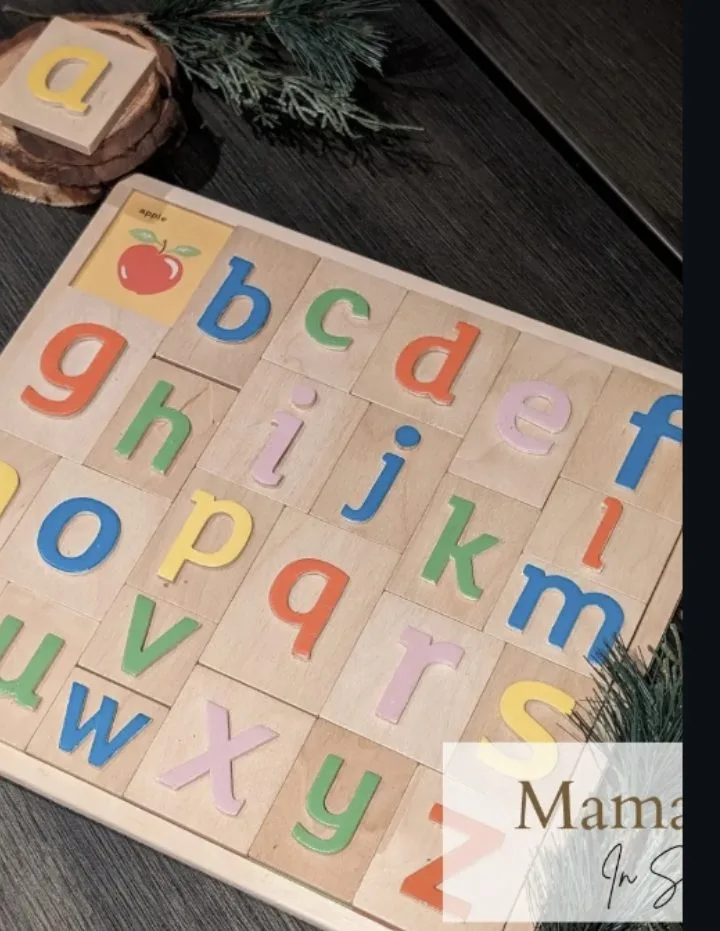


Tuesday morning, I raised my voice in a way I am not proud of. Not a shout exactly. Worse than a shout, honestly. That tight, flat, through-the-teeth voice that lets everyone in the room know you have run out of something. My five-year-old froze over the letter he was tracing. He did not look up. He just went very still and very careful, the way children do when they are trying to become smaller.
And I stood there with a fistful of pencils thinking: I am the character curriculum. Not the chart on the wall. Not the verse we say at breakfast. Me. Right now. However I handle the next ninety seconds is the actual lesson.
The thing nobody tells you about teaching character
We talk about character like it is a subject. Patience on Monday, kindness on Tuesday, a sticker when somebody shares. And there is nothing wrong with any of that. But my boys are three and five, and they are not learning patience from a worksheet. They are learning it from watching what I do when the milk spills for the second time before nine in the morning.
That used to feel like a crushing weight. If they learn what I model, and what I model is sometimes short-tempered and tired, then what exactly am I raising? I sat with that for a long time. Here is where I landed, and it changed my mornings more than any schedule ever did.
My children do not need to see a mother who never sins. They need to see a mother who repents. That is a completely different assignment, and it is one I can actually do.
A child who grows up watching a woman who never loses her temper learns that good people do not mess up. A child who grows up watching a woman confess, ask forgiveness and turn around learns what the gospel actually looks like in a kitchen. One of those is a performance they will eventually see through. The other is the thing we came here to teach them.
The four sentences I say now
I needed a script, because in the moment after I lose my temper I am flooded and defensive and half of me still wants to explain why it was reasonable. So I wrote four sentences down and stuck them inside a cabinet door. I get down on the floor, at their eye level, and I say them almost word for word:
"I raised my voice at you. That was wrong, and it was not your fault." Name it plainly. Not "I got frustrated because you were being difficult." That is not an apology, that is a bill.
"You did not deserve to be talked to that way." This one matters for a five-year-old especially. He needs to know the line was mine to hold, not his.
"Will you forgive me?" And then I wait. I actually wait for the answer. Sometimes my three-year-old says yes and immediately asks for a snack. That is fine. He is still learning that forgiveness is a thing you offer out loud.
"I am going to ask Jesus to help me, and I want you to help me too." Then we pray, ten seconds, nothing fancy. "Lord, I was angry. Please help my mouth be gentle. Amen."
The whole thing takes under a minute. It costs me something every single time, which I think is part of why it works.
What to do with the rest of the morning
Here is the practical piece I wish somebody had told me two years ago. After a repair, do not launch back into the lesson. Your bodies are both still humming. Put the pencil down and do something small and shoulder-to-shoulder for five minutes.
- Go stand on the porch together and count five things you can hear. No talking about what happened.
- Let them carry something heavy. A laundry basket, a stack of books to the shelf. It resets a little body faster than a talk does.
- Read one picture book with a child on each side of you. Touch is the apology your words cannot finish.
- Give them a low-stakes page that asks for hands and not much talking. Mine will sit and color circles and squares on the Woodland Math counting and shapes page while my heart rate comes down.
Then start again. Out loud. "Okay. We are starting over. Bring me your A page." My five-year-old has started saying "we are starting over" to his brother, which nearly undid me the first time I heard it.
Watch your triggers, not just your temper
Most of my worst moments are not about the boys at all. They are about a lesson I planned that was too long, or a morning I started without eating, or a day where I crammed in three subjects because I felt behind. When I shortened our table time to about twenty minutes and stopped expecting a three-year-old to sit through his brother's work, my temper improved more than it did from any amount of trying harder. If your mornings are consistently blowing up in the same spot, the spot is probably the problem. It is worth looking at how your table and your space are set up before you decide the problem is your character.
Let them see the whole cycle
We do not hide the repair from the boys. If I snap at their dad, I apologize where they can hear it. If I am short with a cashier, I say in the car, "I was not kind back there, and I am sorry about it." I am not performing regret. I am showing them that grown-ups sin, name it and get up again, because the alternative is raising boys who think confession is for children.
Some days I still get it wrong twice before lunch. On those days I go find the members' forum room for the hard days and read other mothers saying the same thing, and I remember I am not uniquely failing. If you want that room, joining is free and always will be, and it comes with a weekly rhythm chart that has personally saved several of my mornings by telling me to stop teaching and go outside.
Your boys and girls are not going to remember a mother who never raised her voice. They are going to remember whether the house was a place where things got made right. That is the character lesson. You are teaching it every time you kneel down on the kitchen floor.