
The lamp was on in the reading nook, the verse was on the chalkboard, and my three-year-old was carrying two picture books to the shared table because I had asked him to bring me "a pair." He walked in very seriously. That is how Math Week 2 begins in our classroom, and it is one of my favorite weeks of the whole fall.
The week is called "Let's Count to 2," and it is exactly that. One number, four days, no rush. I am not a math curriculum expert. I am a mama with a 3-year-old and a 5-year-old who has learned that small, repeated, hands-on things stick better than big ones. Here is how we use it.
Why one number for a whole week
Last week was the number 1. This week we stay with 2 long enough to really know it. For my 3-year-old, knowing "two" means he can hand me two crackers and stop. For my 5-year-old, it means he can see two, write two, and tell me what makes a pair. Same number, two different jobs, and both boys are at the same table.
If you are new to teaching this age, take heart. Nothing is behind. Counting to 2 is real math, and it deserves a real week. You can see what else we have for this age in the worksheet shop.
How our four days run
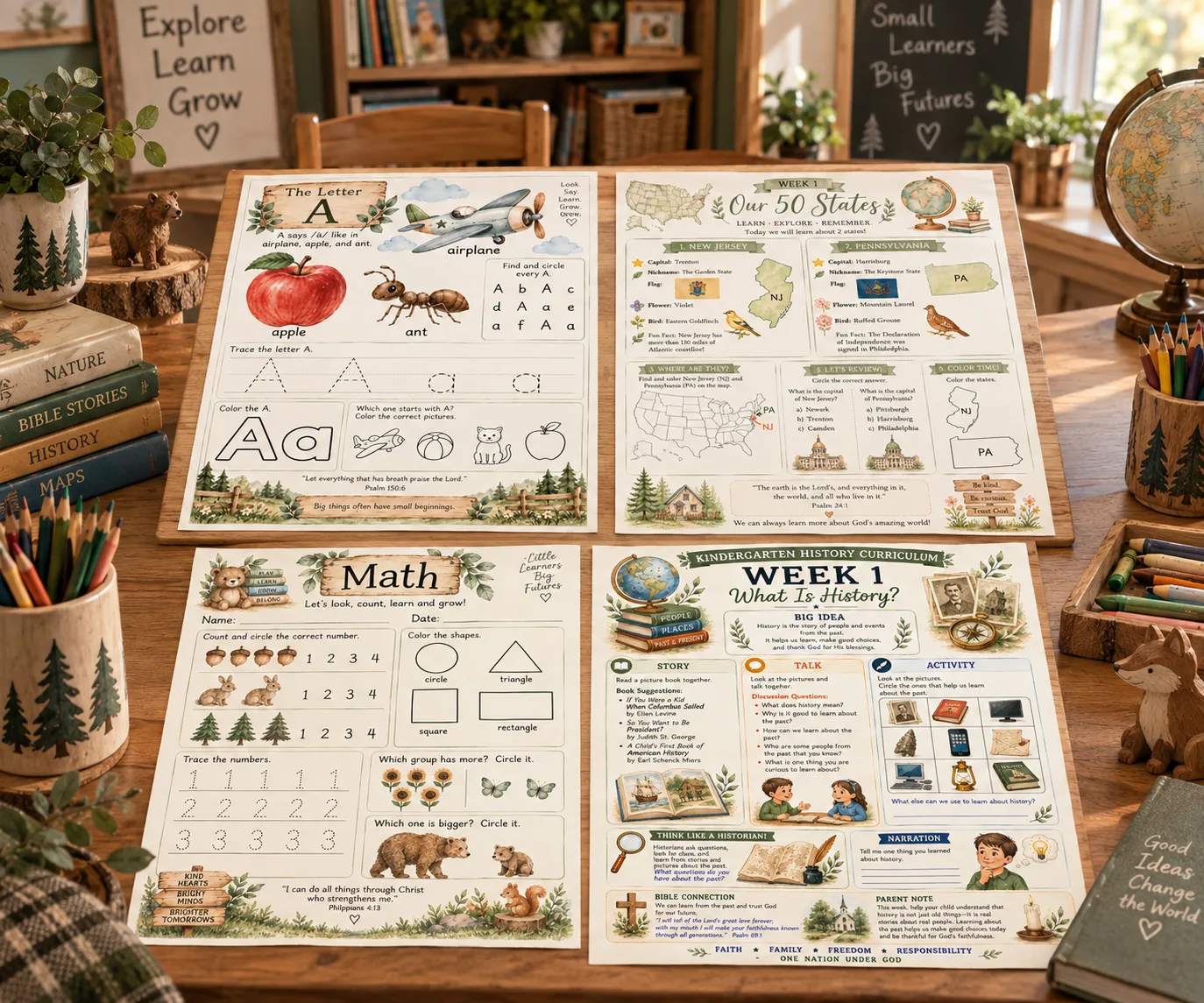
Each day is about ten to fifteen minutes of actual math. We do it right after our devotion, while everyone is still fresh. Pages for the day are clipped on the wall the night before, so I only unclip them and sit down.
Day 1: Find two
Before any paper, we go looking. I say, "Can you find two of something in this room?" The boys walk the classroom. Two stools, two small desks, two lamps' worth of light if you squint. My 5-year-old likes to be right, so he counts out loud. My 3-year-old usually just points at two of anything and beams. Then we sit and do the Day 1 page together.
Day 2: Two in my hands
We count with our bodies first: two hands, two feet, two eyes, two ears. This is the day I lean on a verse. We say, "I praise you, for I am fearfully and wonderfully made," and notice how many of us there are. It is a sweet little way to tie the number to something true. Then the page for the day.
Day 3: Count out exactly two
This is the hardest skill, and the most useful one. Knowing "two" is not the same as stopping at two. I set a small basket of buttons or dried beans in front of each boy and an empty cup. The script is simple:
"Put two in the cup. Now count them back to me. One, two. Is that two? Yes, that is two."
My 3-year-old will often drop three. I do not correct harshly. I say, "Let's count together," and he takes one back out. That small moment is the lesson.
Day 4: Play it back
The last day is review through play. I call out a number, 1 or 2, and the boys bring me that many things from the cubbies. Then they do their final page. When it is finished, I clip the week's work onto our wall so they can look at it. They love seeing it hung up.
What each boy does at the same table
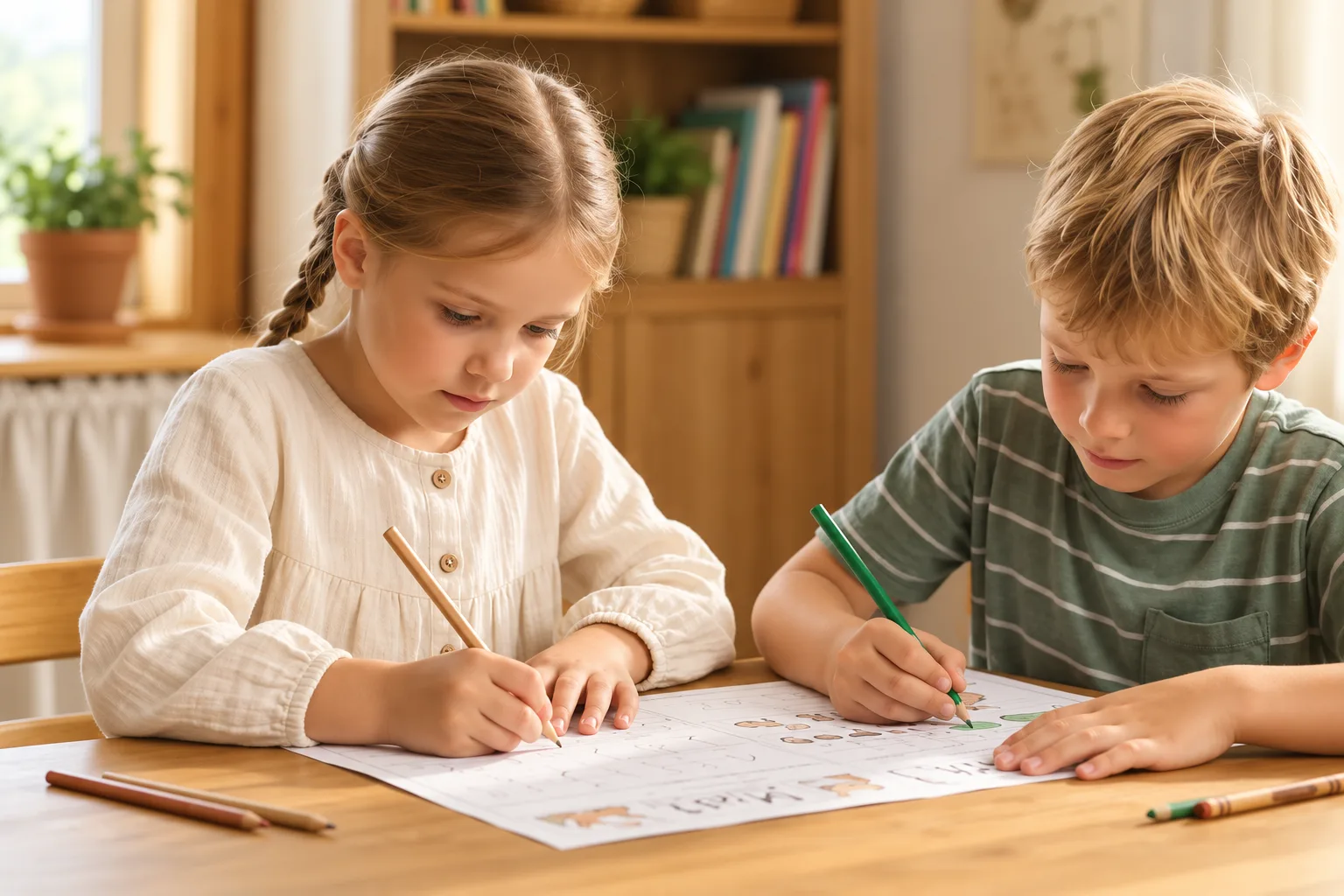
My 5-year-old does the whole page, writes the numeral, and then explains his answers to me. My 3-year-old does the part that fits him: pointing, circling, or placing counters on the page. I never ask for more than he can give, and I never hold the older one back either.
If your boys or girls are a few years apart, this is the rhythm I would suggest. Let the older child be the "teacher" for one question. It makes the little one feel big and the big one feel trusted.
If you are working at the kitchen table
For two years we did exactly this at the kitchen table, so I promise it works. Clear one end the night before. Put a small basket of counters and a cup at each place. Tape the day's page where it will be seen. That is all the setup you need. If you are dreaming of a dedicated space someday, I wrote about designing your homeschool classroom, but please do not wait for it.
A few things I have learned
- Use real things first and paper second. Buttons, beans and shoes beat any picture.
- Stop while they still want more. Ten minutes of happy counting wins over twenty minutes of fuss.
- Say the number out loud with every touch. "One, two" is the whole point.
- Let a hard day be a short day. We can finish Day 3 tomorrow, and the number 2 will wait for us.
Where to go from here
If you want a counting activity that stretches into comparing sizes once your child is ready, the Pumpkin Size Sort cut and paste activity is a gentle next step for preschoolers. Members pay $2.00 per worksheet instead of $4.00, and joining is free, forever. You also get access to the members' forum, where mamas share how their own math weeks went, and 38 free printables to start with.
I would love for you to enjoy this week. Two is a small number, but it holds a lovely truth for a homeschooling home: you are not doing this alone. You have your children beside you, and you have the Lord beside both of you.
Ecclesiastes 4:9 says it plainly, and I wrote it on our chalkboard on Day 4: "Two are better than one, because they have a good reward for their toil."