
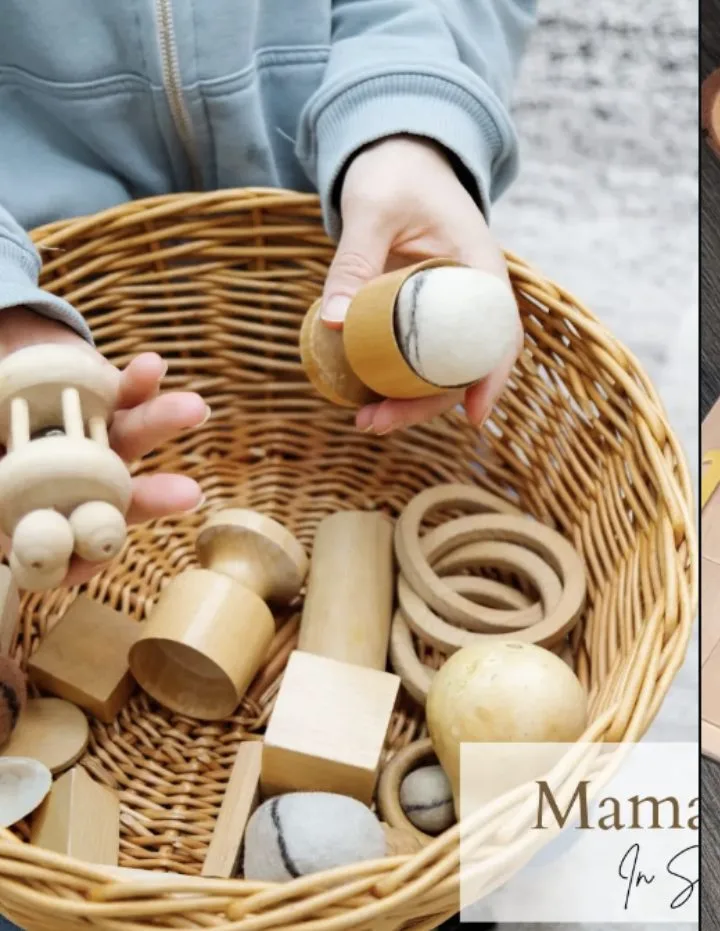
On the last night of our kitchen table years, I set the basket by the fruit bowl, tucked a verse card under the handle, and went to bed knowing exactly how the morning would begin. Nothing else had to be decided. The boys would come downstairs, see the basket, and know that school was about to start.
For two years we did everything at that table. Now we have a classroom with cubbies and a chalkboard, but the basket came with us, and I still think it was the single best thing I did in those early months. If you teach at the kitchen table, and most of us do, this is for you.
Why a basket works at a table you also eat at
A kitchen table has a job before school and a job after it. The trouble is the in-between: the pencils live in one drawer, the scissors in another, the picture books are in the bedroom. A basket gathers all of it in one place, so the table can become a schoolroom in about a minute and go back to being a table just as easily.
It also gives your children something to recognize. A three-year-old does not read a schedule, but he knows what it means when Mama carries the basket to the table. The basket says, gently, that we are beginning.
What goes in the basket
Keep it small enough that you can carry it with one arm. Ours held only what we reached for every single day:
- A verse card for the week, written in your own hand
- A jar of sharpened pencils and a small box of crayons
- Child-safe scissors and two glue sticks, one for each boy
- Two picture books, turned so the covers show
- A folder for each child with that day's page or two inside
- A clean dish towel to lay down as a placemat for messy work
- A small pouch of counters, buttons or dried beans for counting
That is all. Resist the urge to add more. A basket that is too full becomes one more thing to dig through, and the whole point is that nobody has to hunt.
Packing it the night before
This is the part that makes your morning unhurried. After supper, once the table is wiped, clear one end of it. Set the basket there. Put tomorrow's folders inside, and lay the verse card on top.
It takes about as long as it takes to pour a cup of tea. In the morning, the breakfast dishes can go to the other end of the table or to the sink, and you are not choosing between the day's work and the day's mess. You are simply opening a basket.
One folder for each child
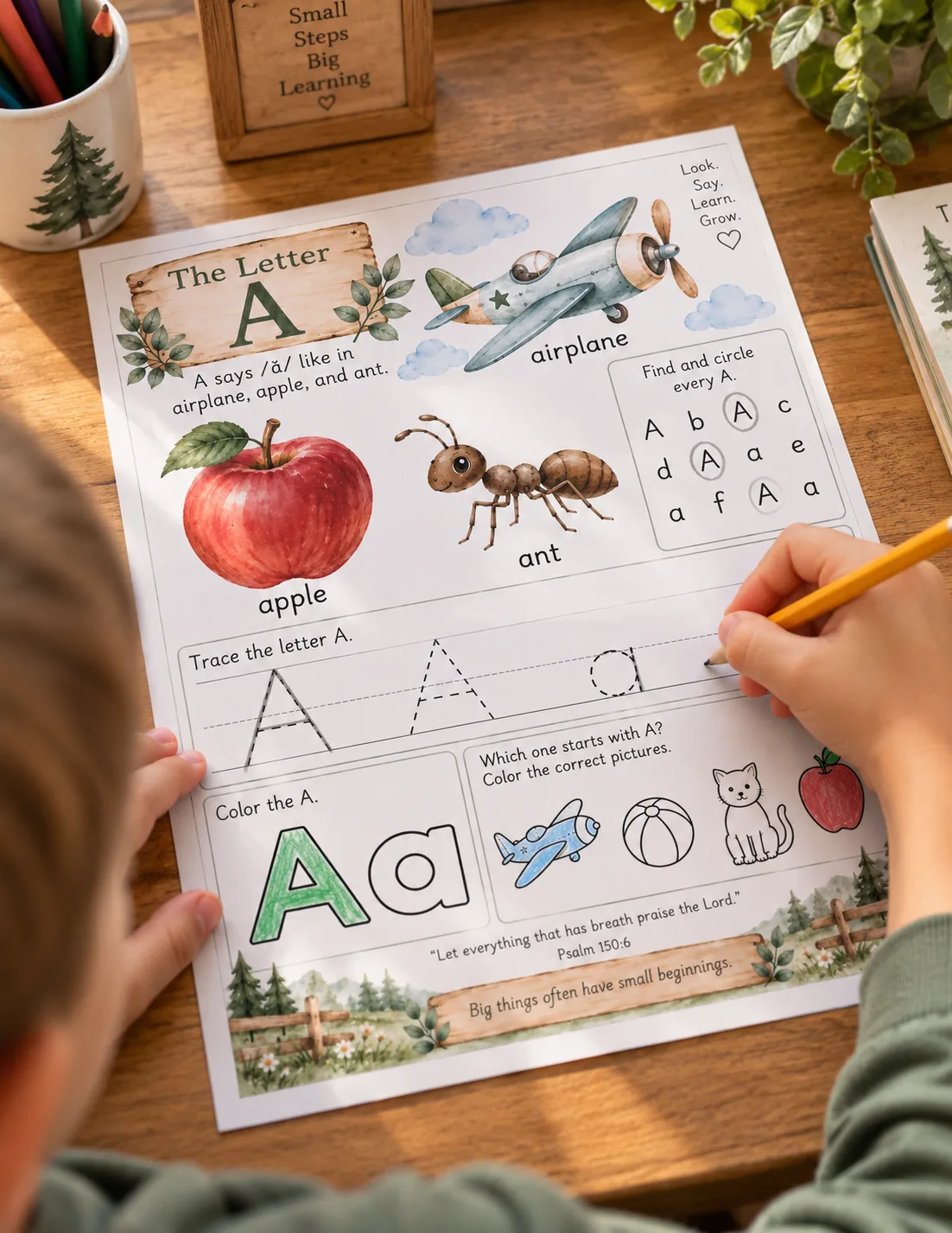
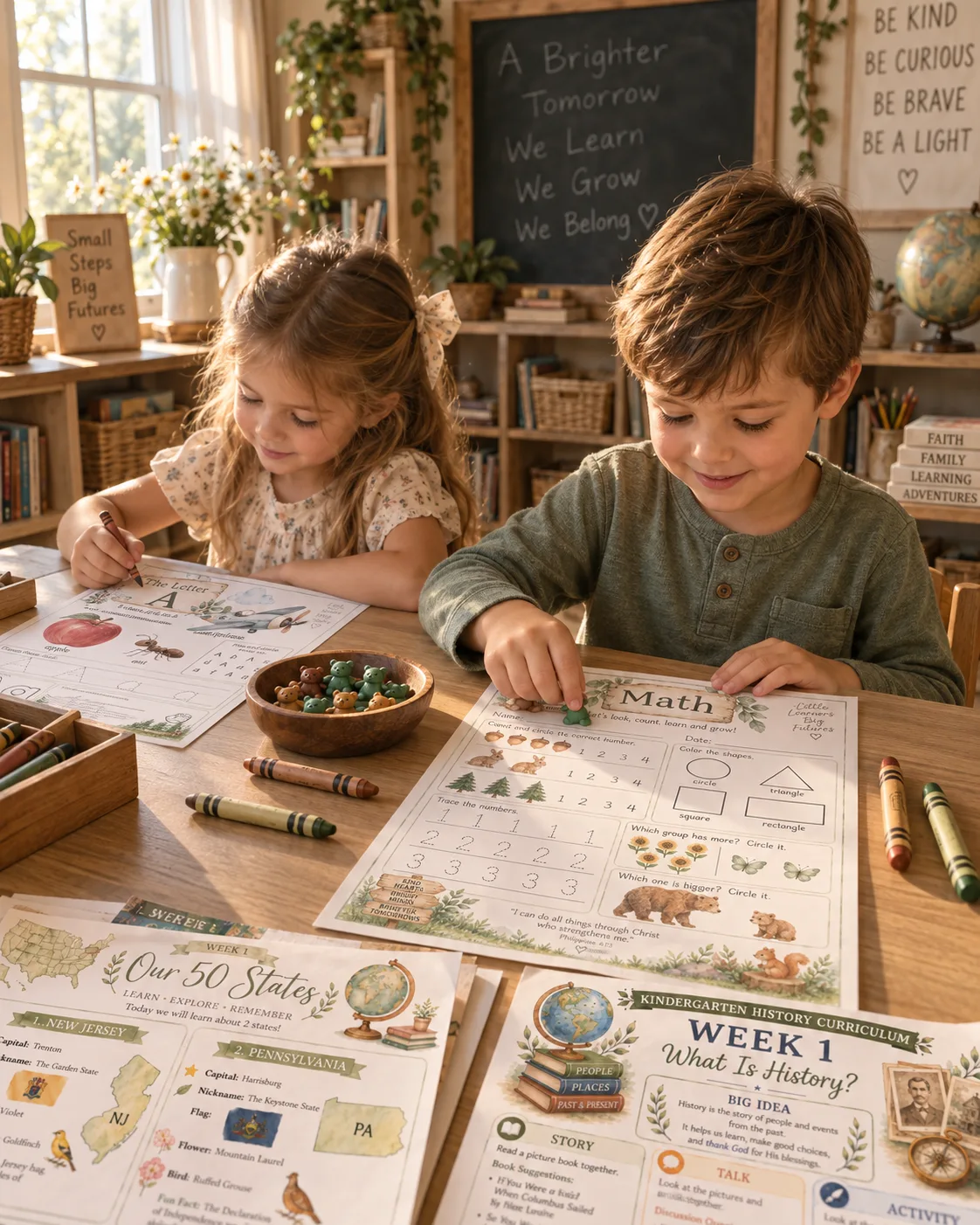
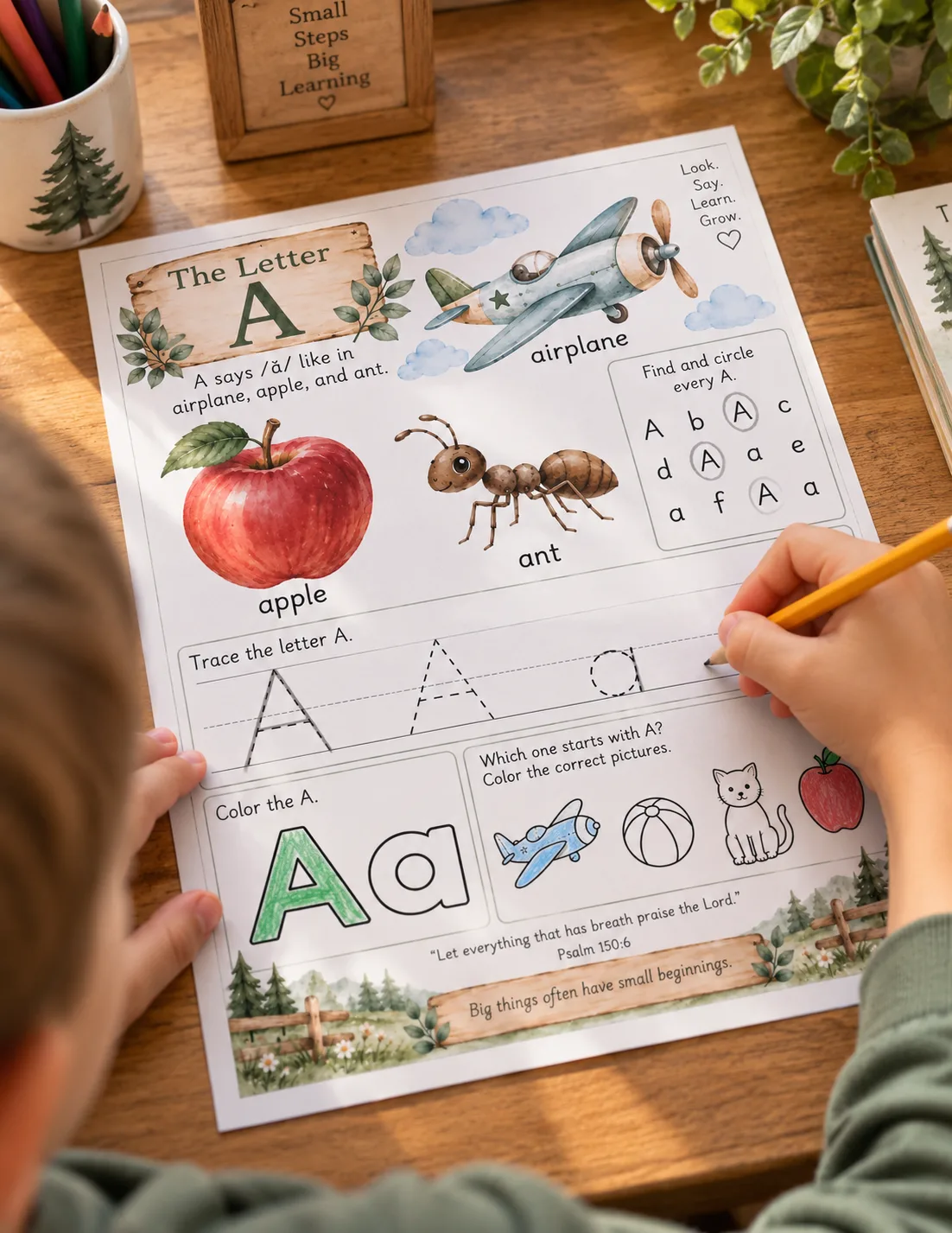
At ages 3 and 5, your boys need different things, and that is fine. Our five-year-old had a page of letter work and a little counting. Our three-year-old had one simple, hands-on page. For a little one, the pumpkin size sort cut and paste is a sweet fit, because he is practicing biggest and smallest while he gets to use the glue stick. A single page like the fall colors leaves worksheet can slide into either folder when you want something quiet and pretty. They print at home on ordinary letter paper, so you can print a week at a time and tuck them in.
How we open the basket
This is a five-minute beginning you can use tomorrow. Sit down with the boys and set the basket in the middle of the table. Say something like, "The basket is open, so school has begun." Then:
- Read the verse card aloud, once, slowly.
- Let each boy choose one picture book from the basket.
- Read one of the books together before anyone touches a pencil.
- Hand out the folders.
That small ritual does more than any worksheet. It tells the boys that school is a good thing we do together, and it gives their minds a moment to settle before they begin. If you want a fuller plan for this part of the day, the morning basket guide is one of the free printables you get when you join as a member. Membership is free, and it also includes the weekly rhythm chart, which helps you see how the baskets fit into your week.
Closing the basket
When you finish, give the boys a job: pencils back in the jar, glue sticks in the basket, books turned face out. I will admit that for the first few weeks I did most of this myself and called it teamwork. They learned it, though, slowly, the way children learn everything. Then the basket goes onto a shelf, a chair or the top of the refrigerator, and the table is yours again for lunch.
A three-minute reset at the end is what makes the evening packing feel light instead of heavy.
When you are ready for more
Some day you may want a corner, a shelf or a whole room. I wrote about that in designing your homeschool classroom, and I loved every bit of building ours. But please hear me: you do not need it. A table, a basket and a willing mama are a real school. Many of the women in the members' forum teach at a table and always will, and their mornings are some of the most peaceful I hear about. If you would like more printables for your folders, you will find them in the worksheet shop, at $4.00 each or $2.00 for members.
The basket was never really about the pencils. It was about order, the kind that makes room for gladness. Paul put it simply: "Let all things be done decently and in order." Pack your basket tonight, set it where your boys will see it, and let the morning come.