

The lamp in the reading nook was on, the verse was chalked up beside the date, and my five-year-old was choosing a picture book while his little brother lined up the baskets in the cubbies. I sat down at my workstation in the corner with a cup of tea and one printed page from my state's education website. That page was the whole reason for the quiet little paperwork morning I'm about to describe.
Almost every mama who messages me in her first month asks the same thing: what did your state actually ask for? I understand the worry. A letter of intent sounds official, and when you are brand new it can feel like the one thing standing between you and the beautiful part.
I can't tell you what your state requires
I'm a homeschool mother, not a lawyer and not a curriculum expert, and I would be doing you a disservice if I handed you a list and said "this is what everyone needs." Requirements vary a great deal from state to state, and they change. Some states ask for a letter or a form, some ask for something different, and some ask for very little. What I can do is walk you through how I approached it, so you are reading the right page for yourself.
The place I send everyone first is our resources page, where I keep state law links and the curriculum we trust. Start there, then go to your own state's official education page. That is your source. A neighbor's memory, a forum post or my own morning is not.
What I looked for on the page
I printed it and read it with a pen. I wasn't hunting for anything scary. I was just writing down plain answers to a few plain questions:
- Does my state ask me to notify anyone at all, and who is that person or office?
- Is it a letter I write myself, or a form I fill in?
- What information goes in it? Often it is names, ages, an address and a start date, but read yours to see.
- When is it due, and does it need to be repeated each year?
- Is there anything else attached to it, such as records, testing or a withdrawal step if a child is leaving a school?
That last question matters most if your boy is leaving a school. If he has never been enrolled, the order of things can be simpler. Either way, read the exact wording on the official page, and if something is unclear, ask the office that sent it. They get that question every week.
The plain shape of a letter
If your state asks you to write the letter yourself, it usually doesn't need to be clever. Mine felt more like a note than a document. Here is the shape I would sketch out, and then I would check every line against my own state's page:
Today's date. The name of the office. A sentence saying you are writing to let them know you will be educating your child at home. Your child's name and age. Your name and address. Your signature.
That's it for the skeleton. If your state wants more, it will say so, and you add exactly what it says and nothing extra. I don't explain my curriculum or my reasons in a letter unless the page tells me to. Short and accurate is the goal.
Where it lives afterward
Here is the part I'm sure about, because it's just housekeeping. Keep a copy. I have a folder in my corner workstation with the letter, the date I sent it, and any reply. If you are working at the kitchen table, as we did for our first two years, give the folder one permanent spot at the end of the table or on a shelf nearby. A folder with an address means you are never searching for it later.
Five minutes with the boys while you do it
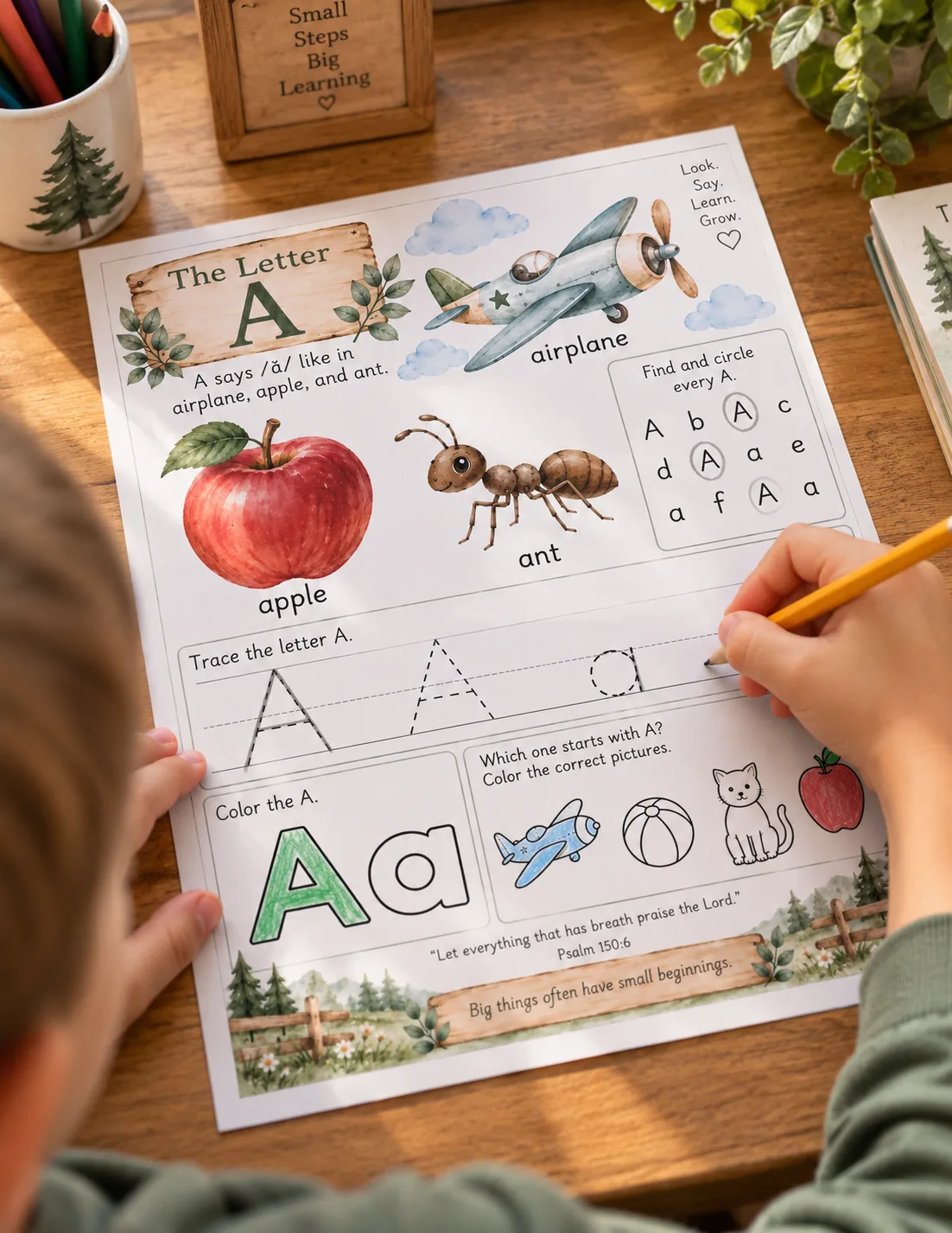
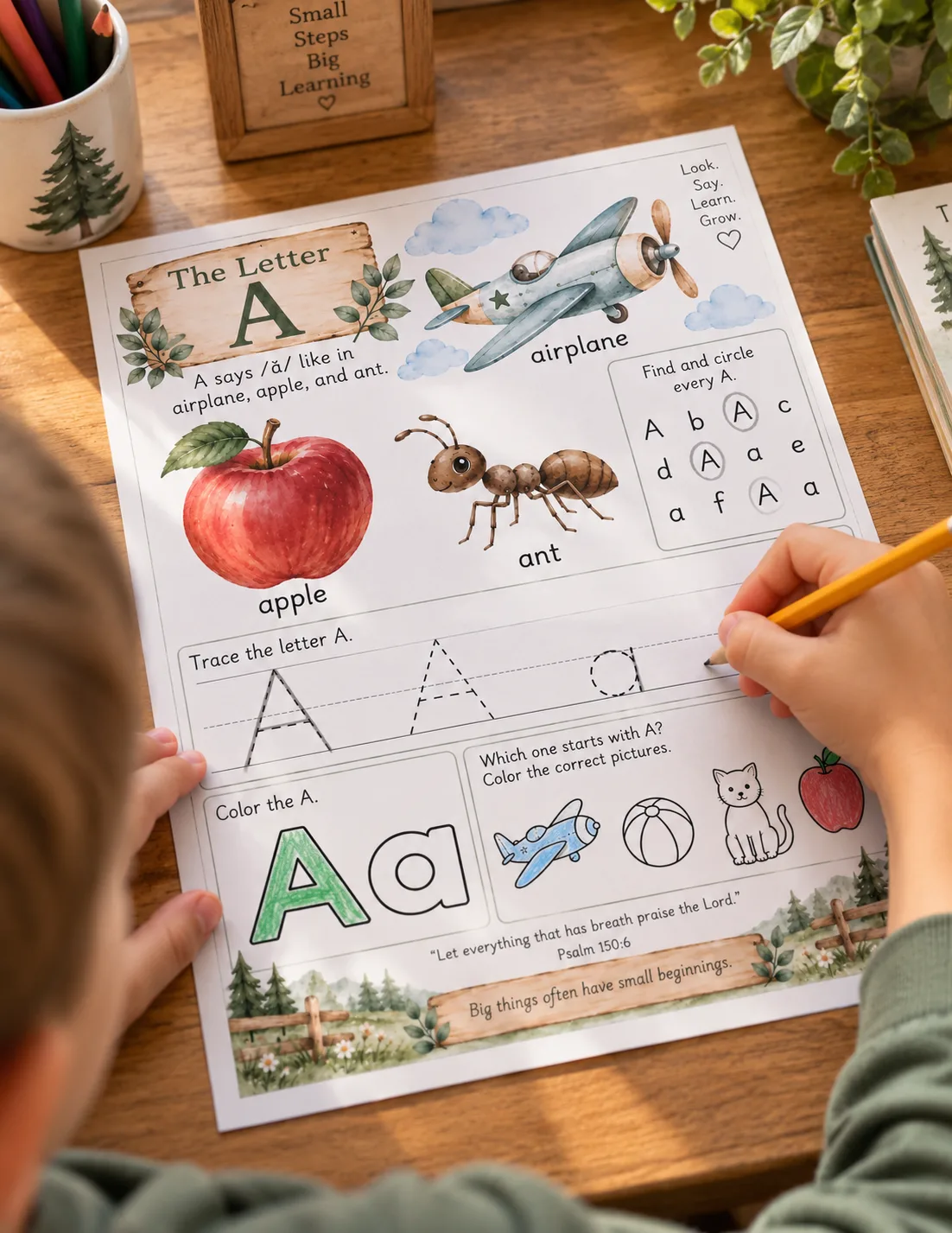
Paperwork goes better when the children are glad to be near it. After I finished my letter, I let my five-year-old do his own "official" paper. We printed the Fall Colors leaves worksheet, which has name and date lines at the top. I said, "This is how a student signs his work. Write your name, then today's date from the chalkboard." He copied the date slowly, and that was his writing lesson for the morning. My three-year-old colored a maple leaf red beside him.
It sounds small, and it is. But the boys saw that school and the paperwork of school are both ordinary, steady things, and nothing to dread. If you want more gentle pages like this, the worksheet shop has print-at-home PDFs for ages 2 through 7, and members pay $2.00 instead of $4.00.
You are not behind
I felt the pull to get everything perfect before our first real day. I had to remind myself that obeying the law and loving my children well are not in competition. We do the small, plain, faithful thing the page asks, and then we go back to the chalkboard and the picture books.
If you are stuck on a specific wording question, joining free gives you a seat in the members' forum, where other mamas in your season can tell you what they did and where they found their state's page. Membership costs nothing, ever. And if you are still wondering whether to begin at all, the case for homeschooling and the FAQ might settle your heart.
Send the letter. File the copy. Then light the lamp and pick up a book with your boys. Scripture says it better than I can: "Commit thy works unto the Lord, and thy thoughts shall be established."