

The candle was lit, the verse was on the chalkboard, and my five-year-old had chosen a book from the basket and settled into the soft chair in our reading nook. He tipped the cover toward the lamp, ran his finger under the first word, and said it slowly out loud. Then he looked up at me as if to check that it counted.
It counted. And it is the closest I can come to answering the question mamas keep sending me: When did your kindergartener actually start reading?
The honest answer has no date in it
I wish I could give you a morning, a month, a birthday. I cannot. What I can tell you is that my five-year-old is sounding out short words and reading them back to me, and that I could not point to the day it began. There was no click. There was a long stretch of him hearing stories, learning his letter sounds, and noticing print on the chalkboard, and then one morning I realized he was doing the thing.
I am not a reading expert, and I will not pretend that my son's timing is a schedule for yours. Children arrive at this in their own season. What I have learned is to stop asking "Is he reading yet?" and start asking "What is one small step we can take today?"
What I was doing before he "started"
Looking back, the reading did not begin when he sounded out a word. It began long before, in ordinary things we were already doing:
- Reading aloud every day, with picture books facing out in the basket so he can choose his own.
- Writing the date and the verse on the chalkboard each morning and pointing to the words as we say them.
- Playing with letter sounds, not just letter names, in the car and at the stove.
- Letting him see me read, with my own Bible open at my workstation in the corner.
None of that looks like a reading lesson. All of it was one. If you are worried you have not "started," look again at what already fills your day.
A five-minute sounding-out routine for tomorrow morning
When he was ready for more, I kept it small. If you teach at the kitchen table, which is where we spent our first two years, this works just as well there. All you need is a piece of paper or a chalkboard.
Three words, one vowel
Write three short words that share a vowel sound, such as cat, mat, sat. Point to the first letter and say, "What sound does this one make?" Let him answer. Then slide your finger under the word and say:
"Say it slow. Now say it fast."
Do all three words. Then write one tiny sentence, like The cat sat., and let him read it to you. Then stop. Five minutes, not ten. I would much rather he leave wanting one more word than leave dreading the next lesson.
What to say when he gets stuck
I used to supply the word the second he hesitated. Now I say, "Start with the first sound. What comes next?" If he is still stuck after a moment, I tell him the word cheerfully and we read the sentence again from the beginning. Nothing is lost. He hears that a stumble is just part of reading.
Let the words be small and real
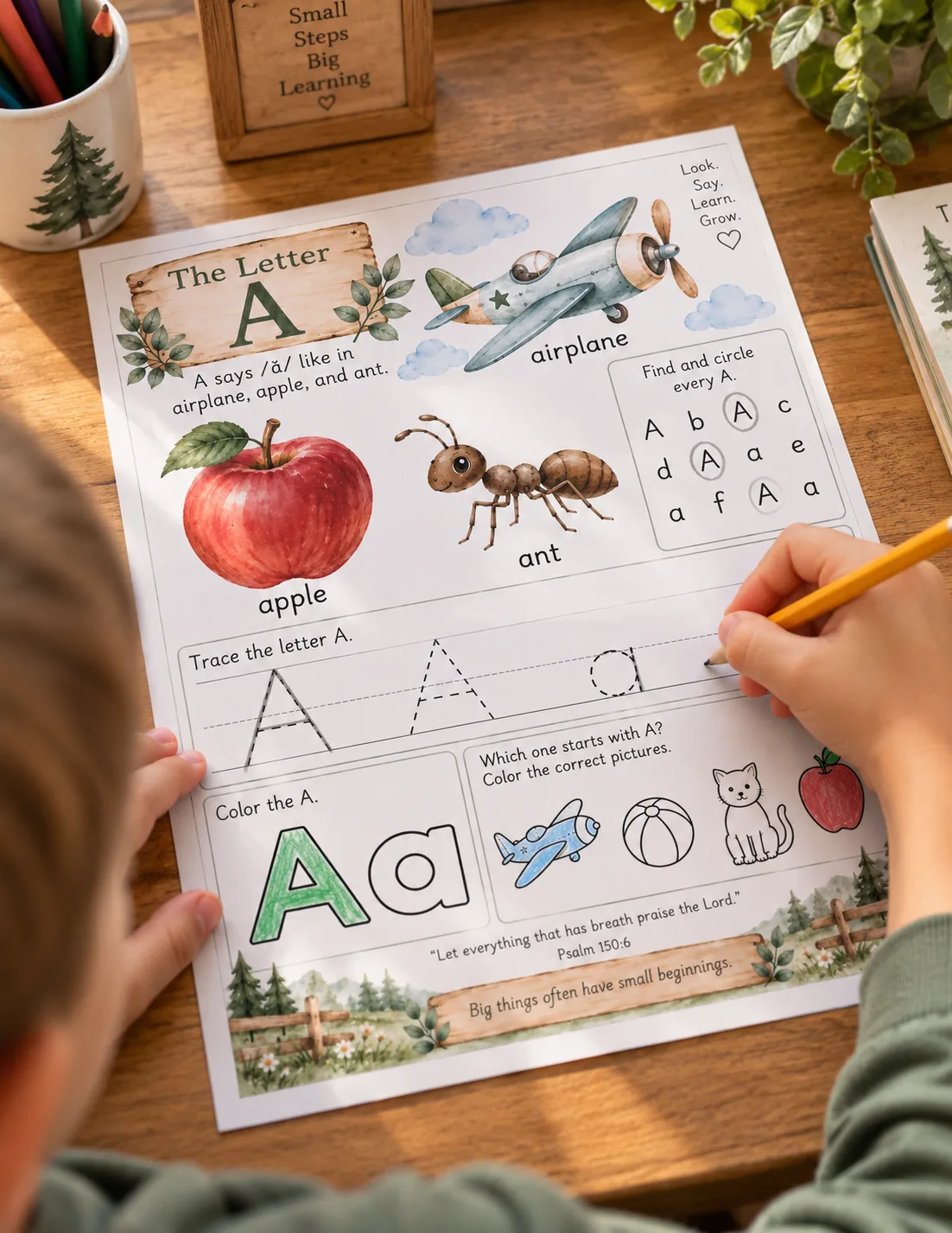
Beginning readers love print that means something. Colors are a good place to begin, and the Fall Colors: Leaves Are Falling All Around worksheet has red, yellow, orange and brown labels to read while he colors four maple leaves. He is not drilling. He is coloring a leaf and matching a word to it, which is exactly the kind of reading a five-year-old can feel proud of.
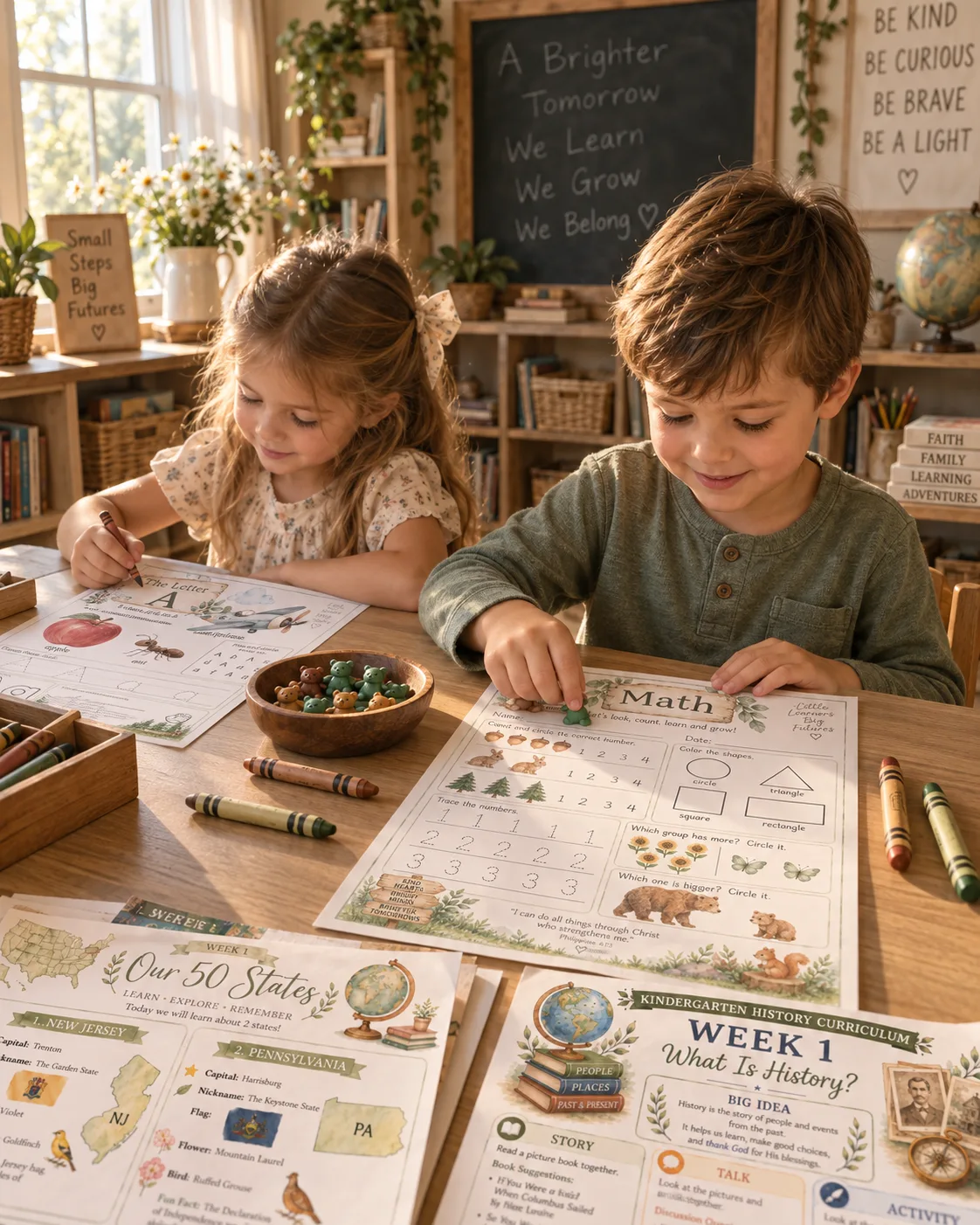
For a younger one, the Pumpkin Size Sort cut and paste activity is a gentle literacy page for preschool, and my three-year-old likes to work beside his brother while we do ours. You can find more pages by age in the worksheet shop. Every worksheet is $4.00, or $2.00 if you are a member.
Set the room up so reading is the easy thing
Much of our progress came from the room, not from me. The reading nook has one soft chair, a warm lamp and a basket of books facing out, so a boy can walk over and choose by the cover. If you want to think through a corner like that, I wrote about designing your homeschool classroom, and you do not need a whole room for it. A basket and a lamp by the end of the table will do.
If you are comparing your child to a neighbor's, a cousin's or a stranger's post online, please put that down. Requirements and expectations vary by state, and our resources page points you to where to check what applies to you. Beyond that, the pace is yours.
When you want company on the slow days
Some mornings I need another mama to tell me it is fine. Joining free gives you access to the members' forum, with rooms by age, by season and for the hard days, and 41 free printables, plus 50% off every worksheet. Ask the reading question there. Somebody will have walked it recently and will answer kindly.
So when does it start?
I think it starts the first time you hold your child on your lap and read him a story, and it keeps starting every morning after. The day he sounds out a word on his own is a lovely day, but it is not the beginning. It is just the day you got to see what was growing the whole time.
So light the candle, write the verse where he can see it, and let him choose a book. What is being made in him is not late and not behind. As Ecclesiastes says, "He hath made every thing beautiful in his time."