
The lamp was on in the reading nook, and my five-year-old had chosen his book before I finished writing the verse on the chalkboard. He sat in the soft chair with the picture book open on his knees, and I remember thinking, this is already school. Nobody had taught me to do that. I had only made a place for it.
If you have never taught before and a Kindergartener is looking at you expectantly, I want to say that same thing to you. You are closer than you think.
You do not need a full year planned
When I began, I thought I needed every subject lined up and a schedule with times down the side. What I actually needed was a small beginning I could repeat. Kindergarten is a gentle year. Your child is learning that letters make sounds, that numbers mean amounts, and that a mother can be trusted to sit down and teach. That last one matters most.
So begin with three things. Not twelve.
The three things I would start with
1. Read aloud every day
This is the easiest subject to teach and the one that quietly feeds all the others. Choose a picture book, read it slowly, and stop once to ask, "What do you think happens next?" That is comprehension, vocabulary and a happy memory in one sitting. I keep our books facing out in a basket so my boys choose with their eyes, and you can do the same on a shelf or in a bin by the couch.
2. Letters, sounds and a few sight words
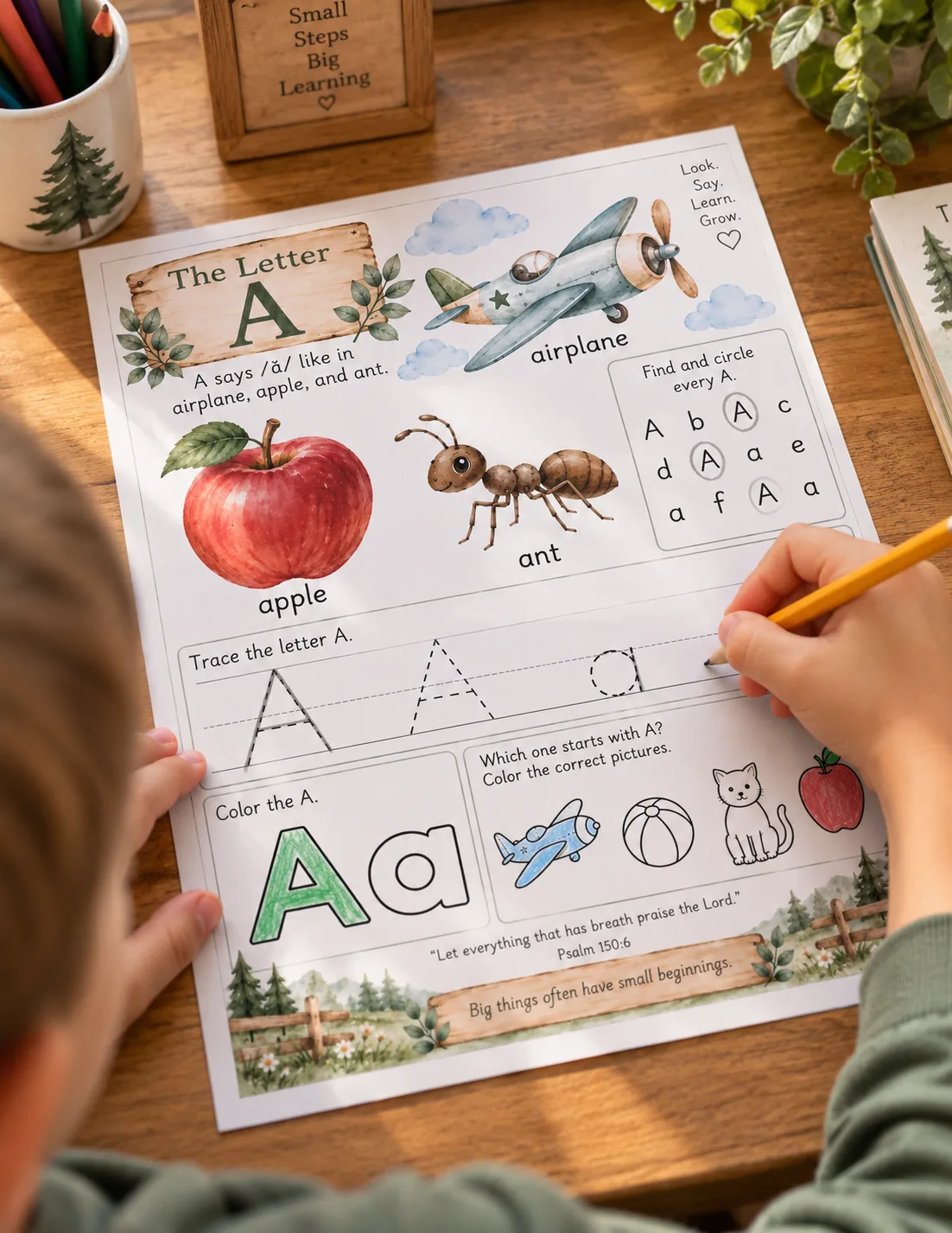
Go slowly here. Pick one letter, say its sound, and find it on a page together. When your child knows most of the sounds and wants more, a few common words to recognize on sight will help reading feel like a door opening. The Sight Words for Early Readers worksheet has a beginner sheet and an expanded one, so you can start with the easy page and move on when your child is ready.
3. Counting you can touch
Count real things: stairs, spoons, acorns on a windowsill. Have your child touch each one as they say the number. Touching teaches that the last number said tells how many. Paper can come later.
A ten-minute morning you can try tomorrow
Here is a small rhythm, and you can say almost this exact thing to your child.
- Minute one to two: Say a short prayer or read one verse. "Let's thank God for today and then read together."
- Minute three to six: Read one picture book aloud.
- Minute seven to nine: Pick one letter. "Our letter today is B. Can you find something that starts with B?"
- Minute ten: Count something together, then say, "That is school for today. Well done."
Say that last line out loud. A five-year-old who hears "well done" after ten calm minutes will come back tomorrow willingly. Ten minutes done happily is worth more than an hour that ends in tears, and you can lengthen it as your child grows into it.
Where to sit
For our first two years we did everything at the kitchen table, and I still believe in it. If you are working at one, clear one end the night before and put a small basket there with a pencil, a few books and whatever you will use that morning. When you do not have to hunt for anything, you can be calm and look at your child instead of the clutter. That readiness is most of the secret.
Over the past year I built a classroom in our home, with a big shared table, little desks, cubbies and a chalkboard, and I love it. But the room is not what made our mornings work. The rhythm did. If you are curious how a space can come together at any size, I wrote about designing your homeschool classroom, and it applies to a corner just as well as a whole room.
Add one thing at a time
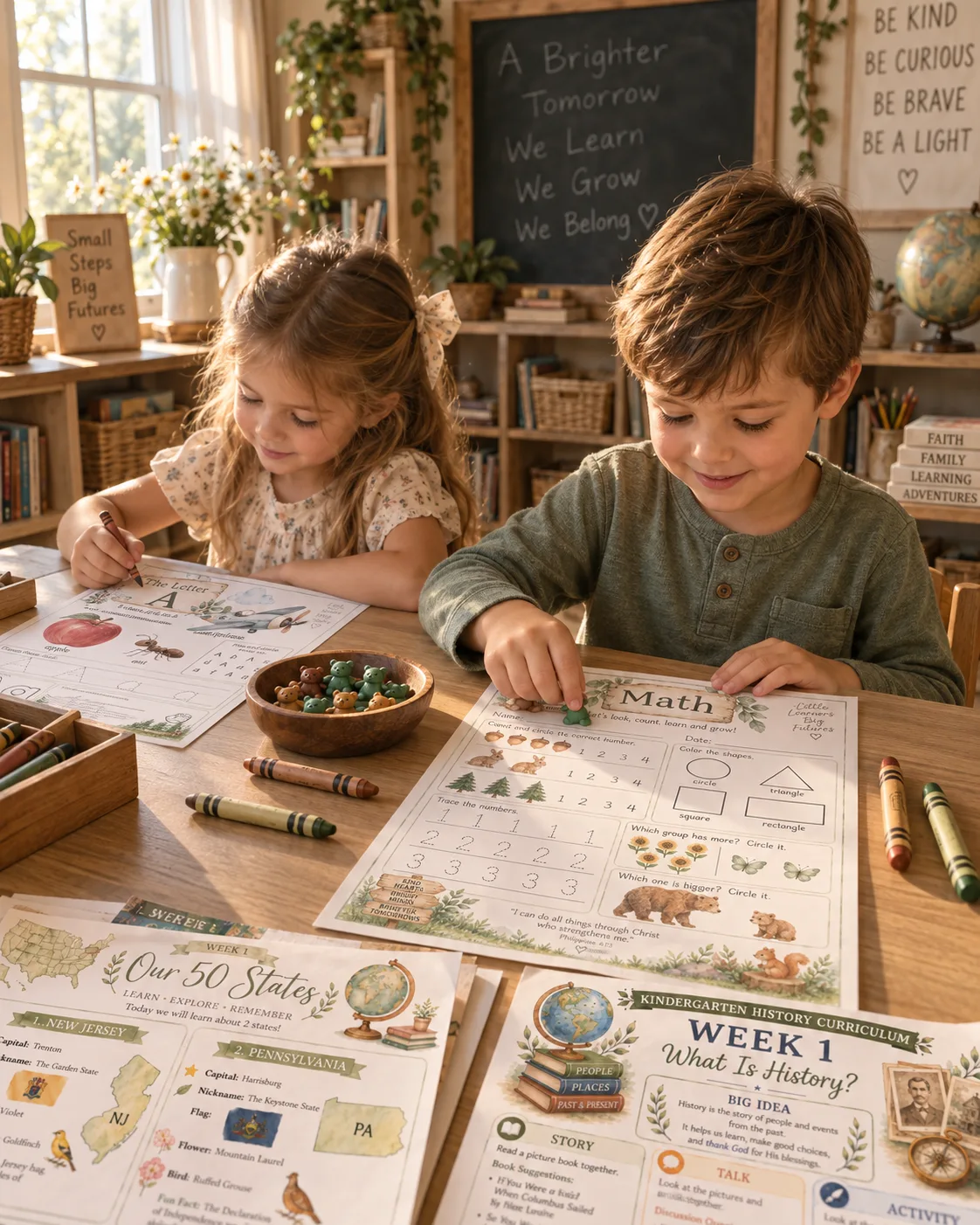
Once your ten minutes feels easy, add a single thing. Maybe a short geography lesson, which my boys enjoy. Our 50 States Week 2, Delaware and Maryland is a gentle place to begin, with facts, a flag and a map to color. Or you might draw and talk about family history. Add one, give it a couple of weeks, and then decide whether to add another.
The worksheet shop has print-at-home pages for Kindergarten, at $4.00 each or $2.00 for members. Membership is free, forever, and gives you 50% off every worksheet plus 39 free printables, including a weekly rhythm chart and a morning basket guide. You will not need to buy anything to begin, though, and I do not want you to feel you must.
What can wait, and where to ask
You can leave the grade-level checklists, the full-year plans and the comparison with other children for later. Do check what your state requires, since homeschool law varies from place to place. The resources page points you toward state laws and the curriculum we trust. If you want a few more voices on a hard day, the members' forum is free and moderated, with rooms for every age and season.
And if you are asking whether this is really a good thing to do, the case for homeschooling and FAQ may steady you. So may remembering that nobody loves your child more than you do, which is the best qualification there is.
I have found it a comfort that God does not ask us to hurry little ones. Of himself he says, "He shall feed his flock like a shepherd: he shall gather the lambs with his arm, and carry them in his bosom, and shall gently lead those that are with young." Gently is the whole plan for Kindergarten. Light the lamp, open one book, and begin.