

My five-year-old was writing the date under the verse on the chalkboard, tongue between his teeth, while my three-year-old chose a picture book from the basket by the reading nook and carried it to the table like it was something breakable. The lamp was on. Nobody was in a hurry. That is the morning I want to tell you about, because it did not happen by accident, and you can have one like it.
One theme, two jobs
For a long time I thought teaching two ages meant planning two mornings and somehow running them at once. It does not. What changed things for us was choosing one theme for the day and giving each boy his own job inside it. Same story, same leaves, same pumpkins on the table. Different work in each pair of hands.
If we are talking about autumn leaves, my three-year-old's job is to touch and stamp and name colors. My five-year-old's job is to look closely, sort, label and write. They are sitting side by side in the same conversation, and each one is stretched just a little, which is all a small child needs.
How to set the table for two
For two years we did this at the kitchen table, and I loved it. If that is where you teach, here is what helped most: clear one end the night before, and put the little one at your elbow and the older one across the corner from him. Keep two small baskets, one for each child, so the work has a home before the morning begins. You are not behind because you do not have a classroom. A table is a real place to homeschool.
In our own room now, we have one big shared table at counter height with stools, and the boys sit there together every morning. Later they asked for two small desks, and those turned out to be for the quiet part, when one needs to work alone for a few minutes. If you are curious how we arranged it, I wrote about designing your homeschool classroom, but please do not think the room is the secret. The secret is the order of the morning.
A morning that holds two ages
- Together first. Verse, date, one picture book read aloud. Both boys, same lap of attention.
- Same hands-on work, two levels. I set out one activity and tell each boy what his part is.
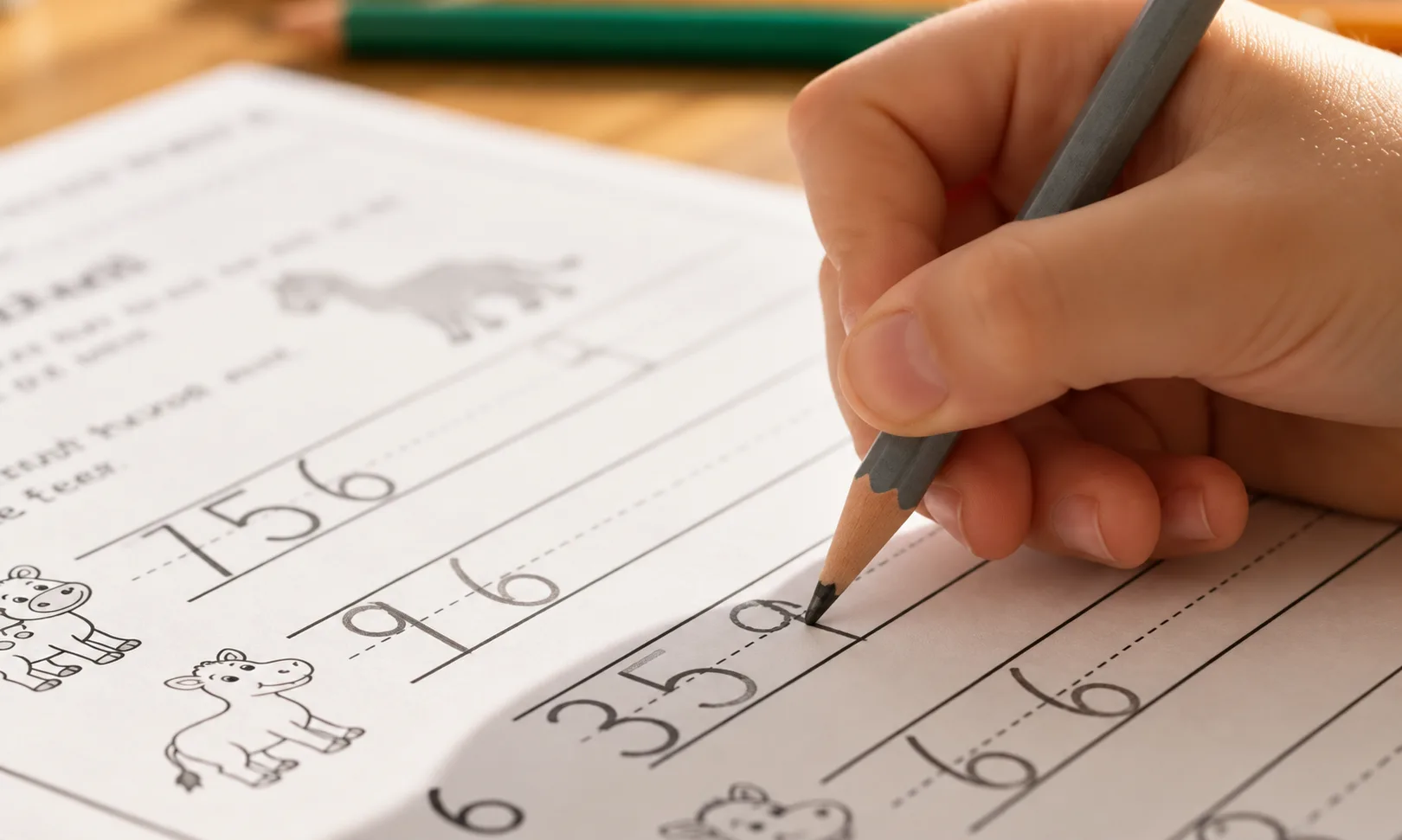
- Older child's quiet work. My five-year-old moves to his desk for a page of writing or a number sheet while the three-year-old stays with something tactile.
- Together to close. They show each other, and me, what they made.
What I actually say
I keep the words simple and say them the same way each time: "We are all looking at leaves today. Your job is to stamp and tell me the colors. Your job is to find four leaves that match and write the color word under each one." Then I stop talking. Naming the job out loud, in front of both of them, takes away most of the comparing before it starts.
One activity, two levels
Here is how a leaf morning goes. I set out the fall leaf stamping activity pack, which is made for all ages. My three-year-old stamps the leaf tree and says every color he uses. My five-year-old does the leaf animals and then tells me a sentence about each one, and he writes the sentence himself if he is feeling brave. Same pack, same paint, different ceiling.
When I want the older one to do a little more, I add the Fall Colors leaves worksheet, where he colors the maple leaves and matches the red, yellow, orange and brown labels. The three-year-old can color one leaf beside him and call out which color he picked.
Sorting works the same way. With the pumpkin size sort, my younger boy cuts and pastes the biggest and the smallest, and my older boy is the checker who says whether the line is in the right order. Being asked to check someone else's work is a small honor at five.
If you want a craft day with almost no setup, the cotton ball ghost craft is a gentle one for both ages together. You can see everything we have in the worksheet shop, and members pay $2.00 instead of $4.00 for each one.
When the five-year-old takes over
I will admit it once: some mornings my five-year-old wants to do his brother's job, usually by doing it for him. I used to correct him. Now I say, "You are a good helper. Can you show him with your hands, not take his paper?" He nearly always lights up. A big brother who is trusted to teach is a big brother who is learning twice.
Let it be smaller than you think
You do not need a full lesson for each child. One shared theme, one hands-on piece, one quiet page for the older one is a whole morning. If you want to start with something free, joining is free forever, and members get 27 free printables, including the weekly rhythm chart and the morning basket guide, which pair nicely with this way of working. When the day is hard, the members' forum has a room for exactly that, and other mamas who are doing this at the same table you are.
Whatever you do tomorrow, light the lamp, say the verse, and give each child his job. Two ages at one table is not a problem to manage. It is the very picture of what we hoped for when we began, and I think God has been smiling at it all along: "All your children shall be taught by the Lord, and great shall be the peace of your children."