
The candle was lit and the verse was chalked up when my three-year-old climbed onto his stool and announced, "I'm thankful for my sock." It was not the answer I had in mind. I have rarely loved an answer more.
Why I stopped handing gratitude out on paper
I did try a page for it once: a box, a line, "Draw something you are thankful for." My five-year-old drew a truck. The next day he drew the same truck, politely. There is nothing wrong with a truck, but the page had turned thankfulness into a task to finish, and what I wanted for my boys was a way of seeing.
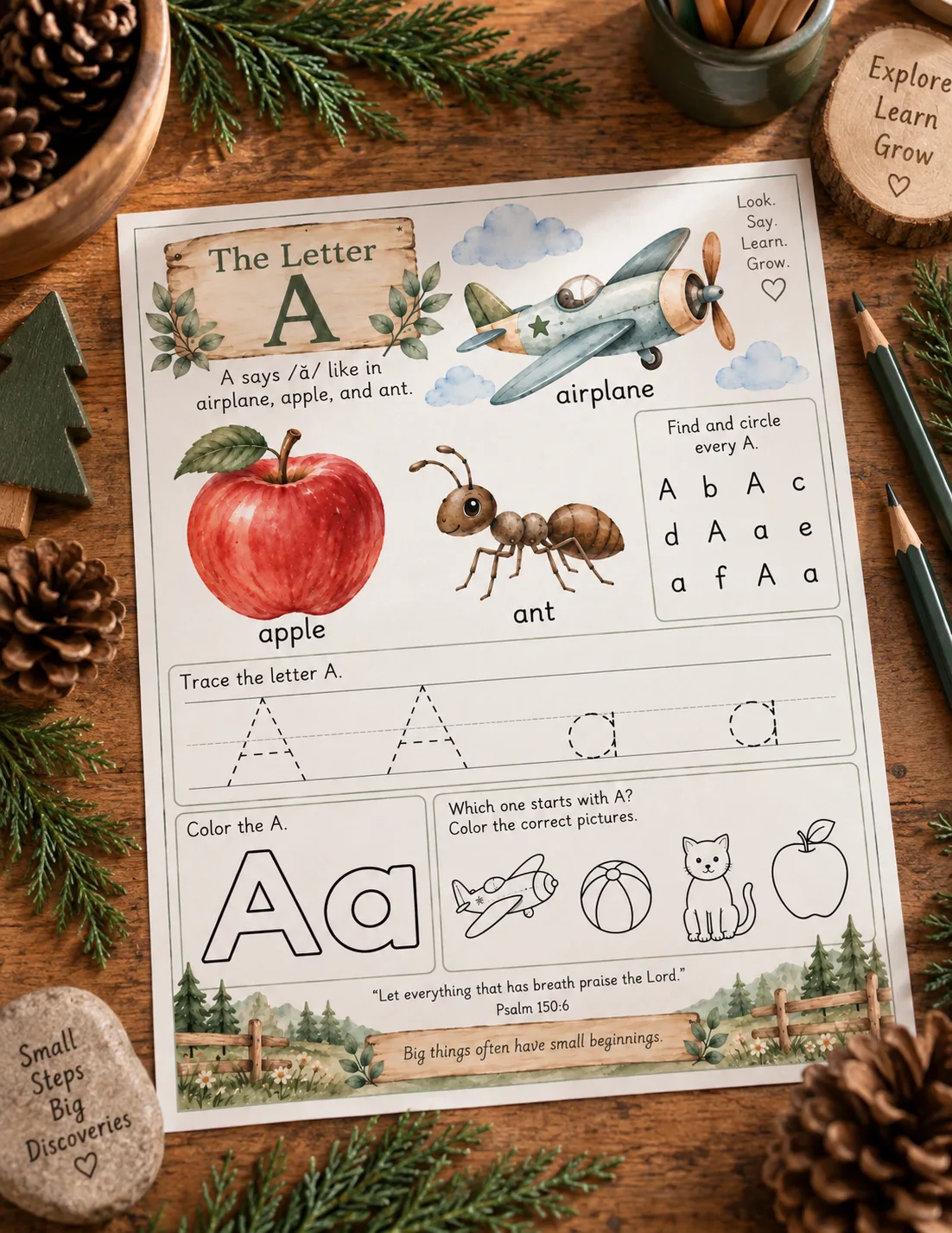
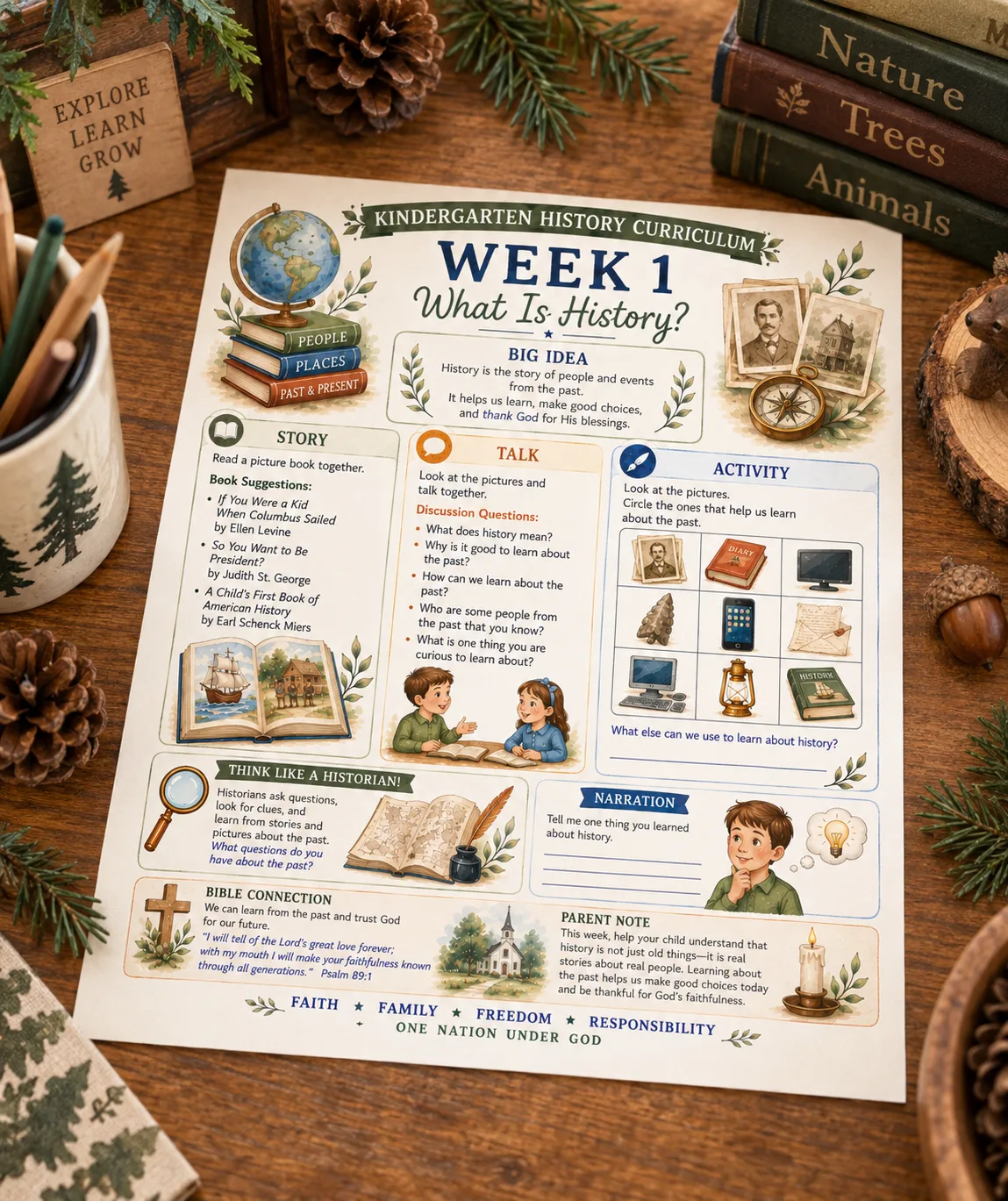
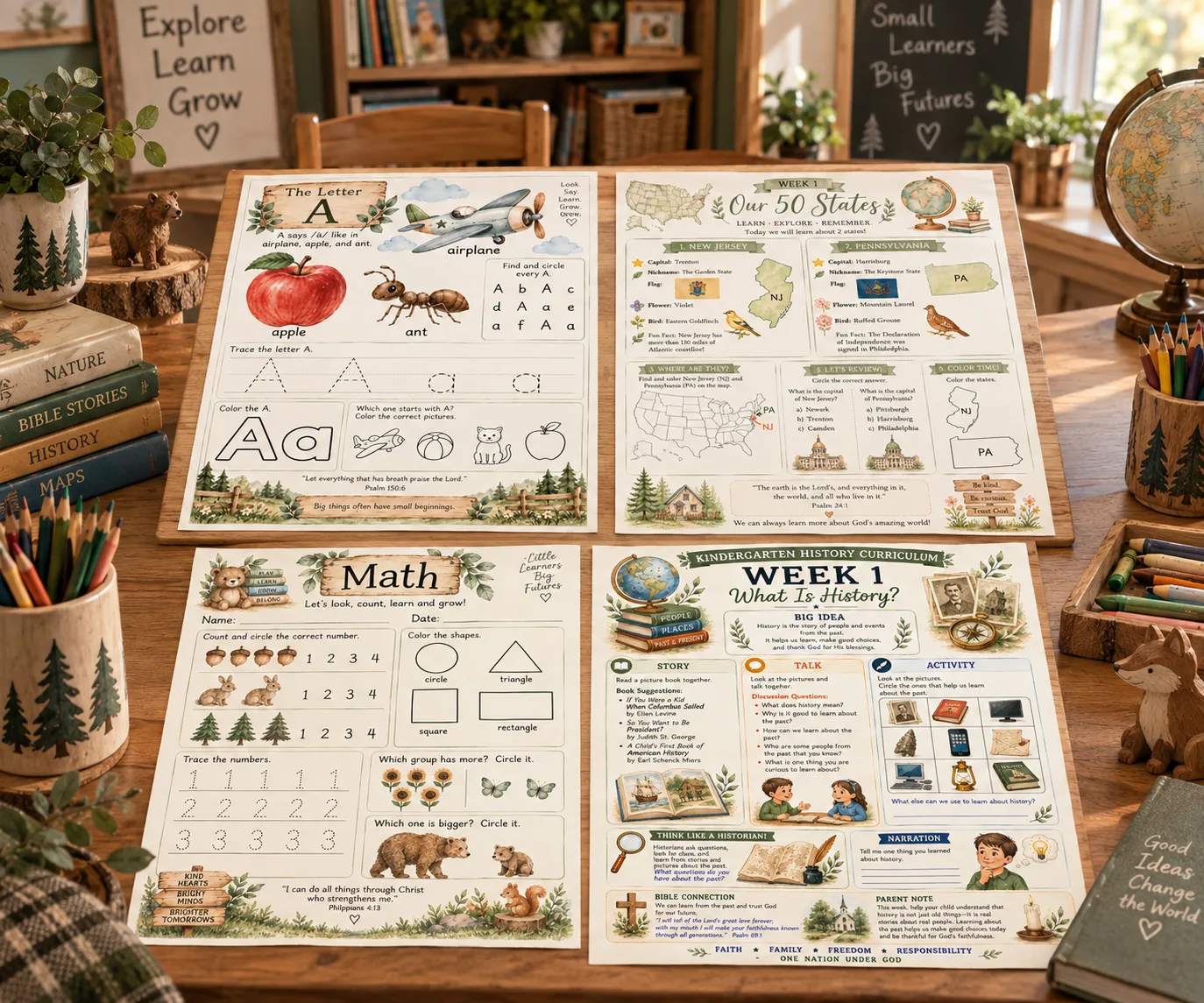
I sell worksheets, and I reach for one happily when we are learning letters or counting. Gratitude is a different kind of thing. It is more like brushing teeth: small, at the same time, every day, until it is simply what we do. So now it lives in our morning rhythm, not in a folder.
One question at the same moment every morning
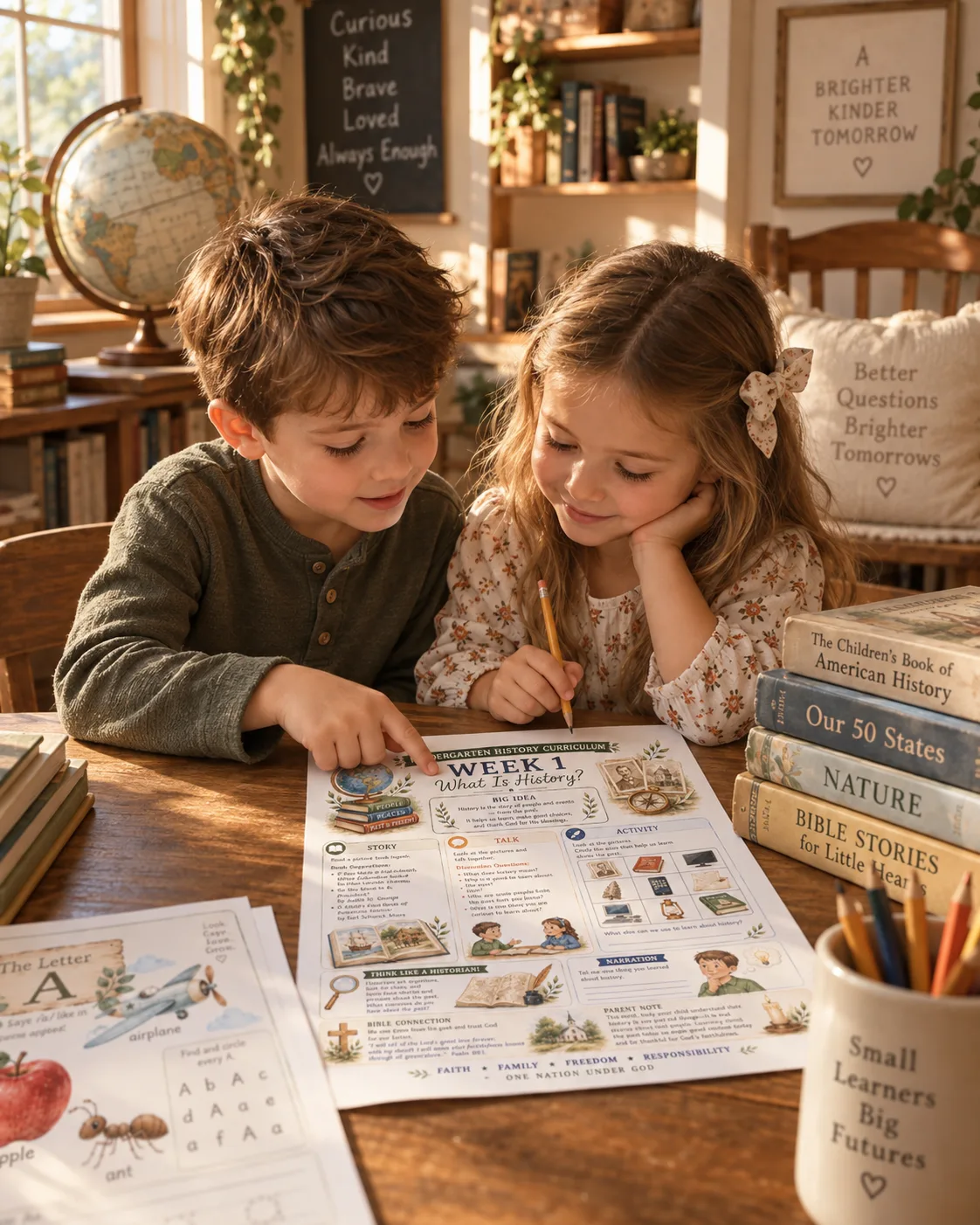
In our classroom it comes right after the verse on the chalkboard and before the first lesson. We are on our stools at the big shared table, the candle is going, and it takes about three minutes. Here is the whole thing.
- Same spot, same moment. After the verse, before any work. The habit hangs on the routine, so let the routine carry it.
- One plain question. "What made you glad since yesterday?" For the three-year-old I sometimes shrink it to "What is something good you can see right now?"
- You go first, and be specific. "The steam coming off my coffee" teaches more than "my family" ever will. They copy what you model.
- End with the same sentence. We each finish with "Thank you, Lord, for ___." The sameness is what a three-year-old holds onto.
- Do not correct the answer. Not once.
Let the small answers stand
That last one is the hardest for me. When my little one says the sock, the dog, or the spoon, I want to steer him toward bigger, more "spiritual" things. I have learned to say, "Thank you, Lord, for Jake's sock," and mean it. God made socks. A child who learns to notice the small gift will one day notice the big one too.
Something I did not expect: my five-year-old began to listen to his brother's answers, and then to borrow them. Then he began to name people, not only things. I did not teach that. I only kept showing up with a candle and a question.
A thankful walk for the afternoon
Gratitude gets easier when it has something to look at. Some afternoons we take a basket outside and each boy finds three things to thank God for, a pinecone, a feather, a bit of bark, and says it out loud right there. The free nature-walk basket list is one of the 39 printables members get at no cost, and joining is free, forever. If you would rather not print anything, a basket and a yard will do just as well.
When you do want something on paper
I am not against paper. I just do not want paper to do the noticing for us. When the boys are coloring, though, it can hold what they have already said aloud. With the Fall Colors leaves worksheet, we color the four maple leaves and each boy tells me one thing he is thankful for in that color. Red might be the fire truck. Brown might be the dirt.
The Fall Leaf Stamping Printable Activity Pack works the same way. Stamp the leaves for the wreath, and I write a thankful thing on the back of each one in the boys' words. Hung on the wall where we clip the week's work, it reads like a little family psalm. You will find more like these in the worksheet shop, $4.00 each or $2.00 for members.
If you are at the kitchen table
We spent our first two years at the kitchen table, and this habit began there, so I know it works at one. Light the candle or do not. Keep a verse on an index card propped against the salt shaker. Ask the question while the oatmeal bowls are still warm. The thing that matters is the repeating, not the room. If you are curious how I think about the space we have now, I wrote about designing your homeschool classroom, but none of this needs a classroom.
And if the habit goes quiet for a week, as habits do, just ask the question again on Monday. No one is keeping score. If you want company, the members' forum has a room for the hard days, and a thankful answer there is often the best kind of encouragement.
What we are really practicing
I do not think I am teaching my boys to be polite about blessings. I am teaching them to look up. Every morning, three minutes at a time, we practice turning toward the Giver before we ask for anything or start any work. That sock, that spoon, that truck: all of it is a gift, and the habit is simply saying so.
"Give thanks in all circumstances; for this is God's will for you in Christ Jesus." Start tomorrow with one question and one sentence, and let it be small.