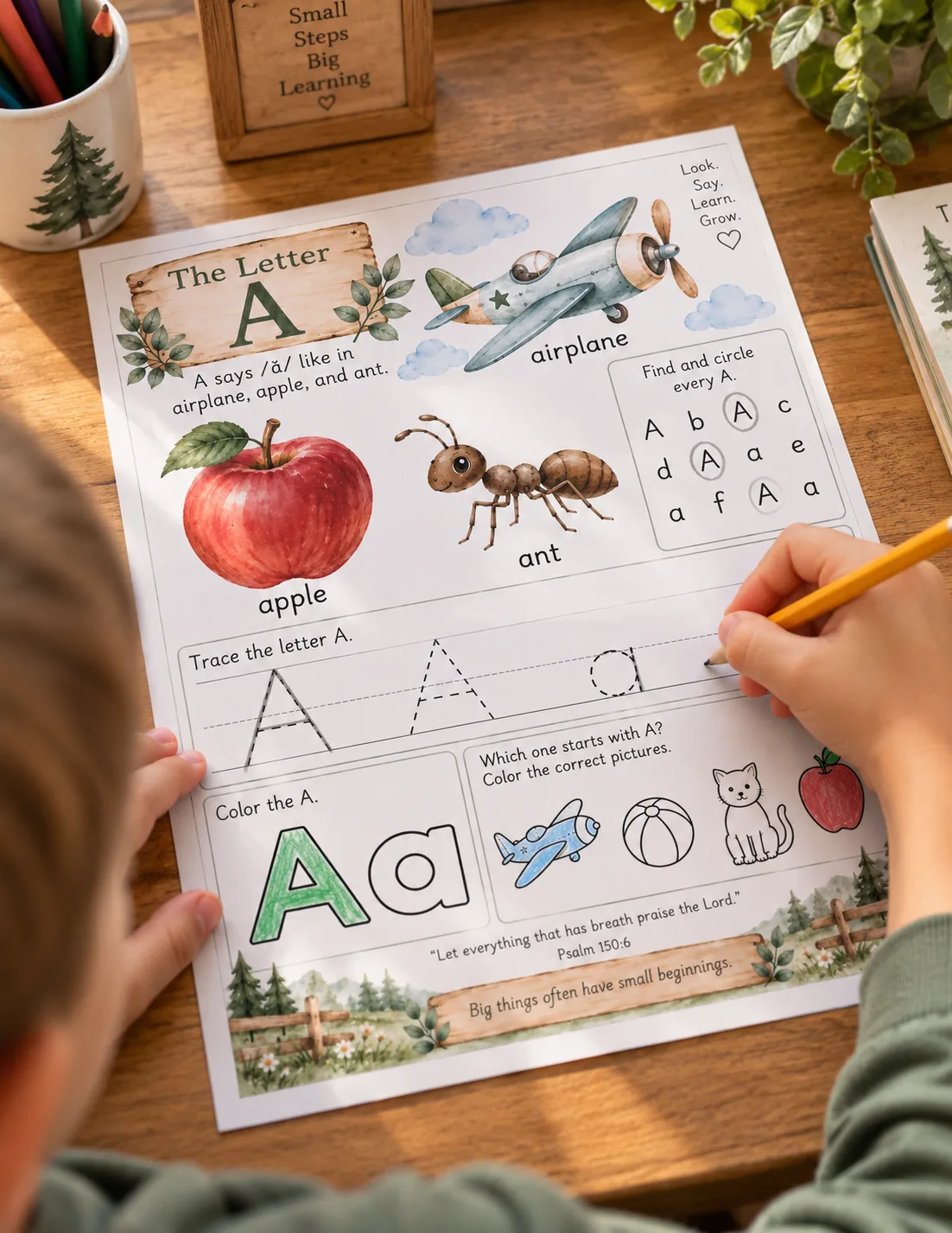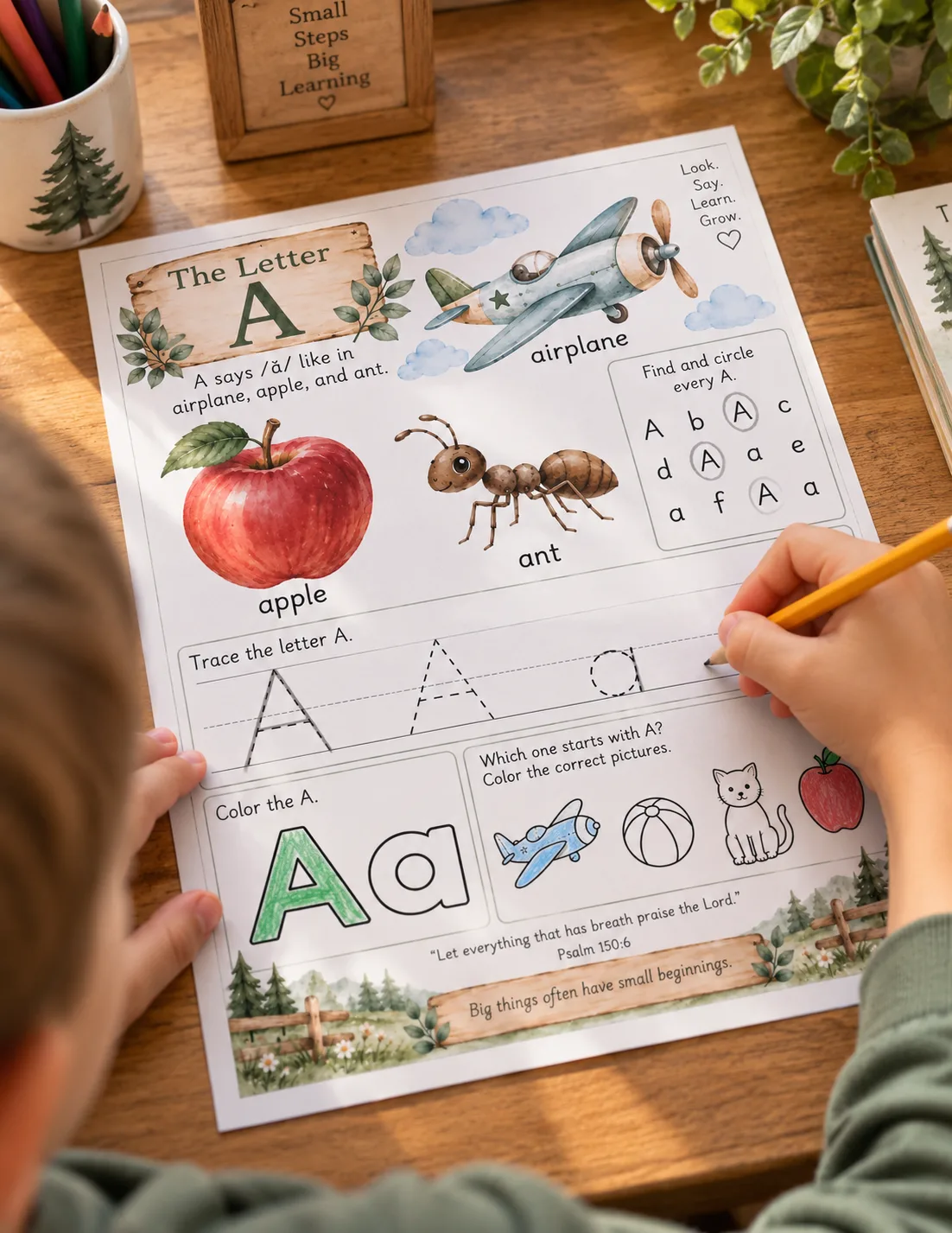

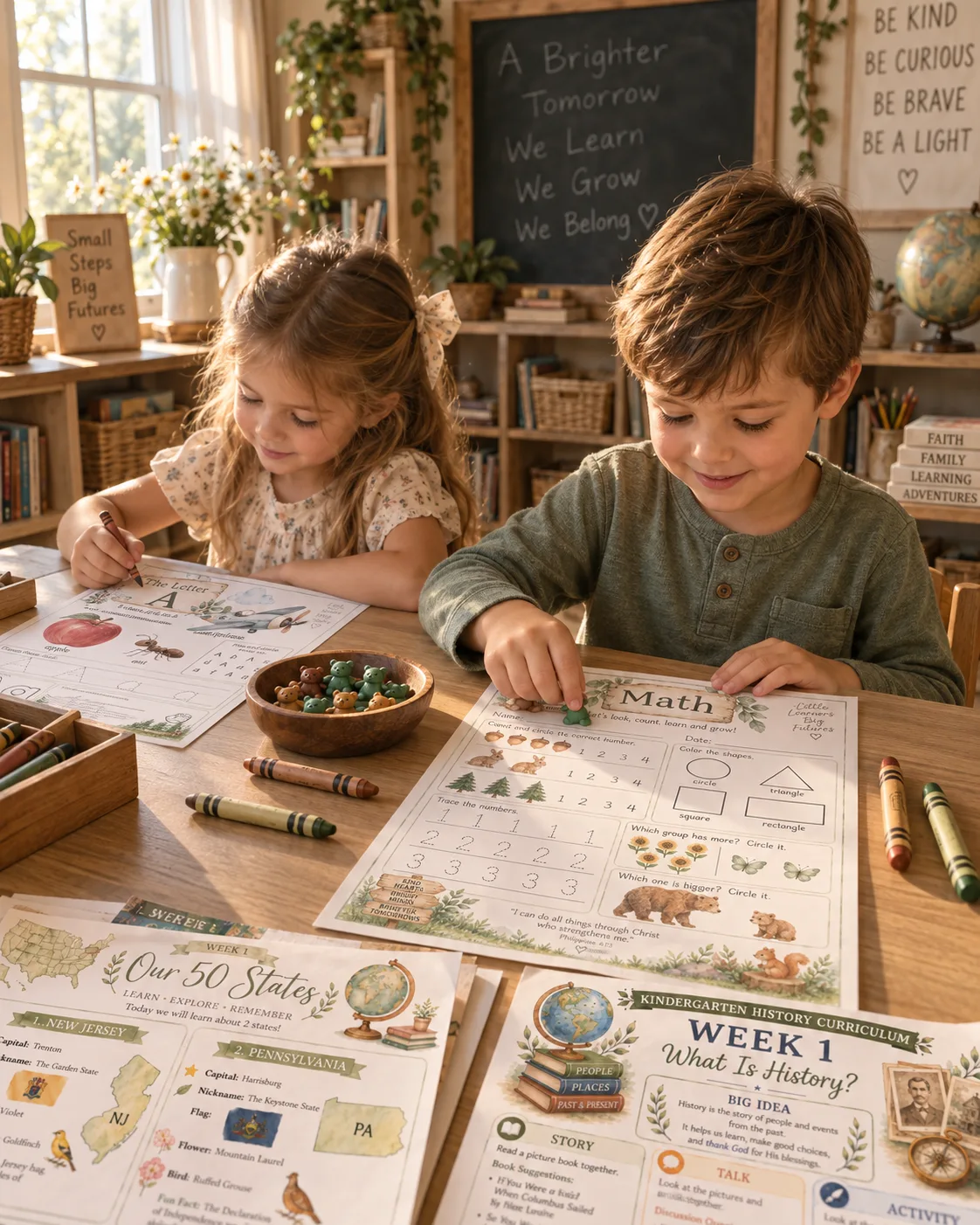
This morning I lit the candle, wrote the verse and the date on the chalkboard, and my five-year-old walked to the reading nook and chose a picture book from the basket. Nobody told him to. That is what a ready room does. But I was not always a mother with a ready room, and two years ago I had never taught anyone anything.
If that is you today, I want to say the kindest thing I know: you can begin with very little. You do not need a full-year plan. You need one small morning, repeated.
You already started teaching
Before you ever bought a pencil, you taught your child to talk, to wash their hands, to say thank you, to be still when you pray. Homeschooling is that same thing with a little more order around it. It helps me to remember that God gave me these boys, not a classroom of strangers, and that He does not hand out children and then withhold what we need to raise them.
If you are still wrestling with whether this is right for your family, the case for homeschooling and the FAQ is a good, quiet read. If you are ready, keep going.
Choose a place, and keep it small
We spent our first two years at the kitchen table, and I loved it. I still think a table is a real place to homeschool, and plenty of you will teach at one for as long as you teach. If you are working at the kitchen table, clear one end the night before. Put a basket of three things on it: a book, a pencil and crayons, and one activity. That is the whole setup.
When you are curious about what a dedicated room can look like later, I wrote about it on the classroom design page. But please do not wait for a room. The room came after the habit, not before it.
A first morning you can do tomorrow
Here is the order I would use with any child from two to seven. The whole thing takes about thirty minutes, and you can stop sooner.
- Light a candle or open the curtains. A small signal tells your child that something lovely is beginning.
- Read one verse aloud. Say it twice. With a three-year-old, that is enough. With an older child, ask, "What do you think that means?" and then listen.
- Read a picture book together. Let your child choose it. Sit close.
- Do one hands-on thing. Keep it to ten minutes.
- Go outside for five minutes. Look at one thing together, a leaf, a bug, a cloud.
Then you are finished. Yes, truly. Close the book and let them play.
What to say
Children want to know what is happening, and they relax when you tell them plainly. Try: "This morning we are going to sit together, hear God's Word, read a story, and make something. It will not take long." That is your whole script. You do not have to sound like a teacher. You only have to sound like their mama.
One hands-on thing to try
If you want something already put together, the Fall Leaf Stamping Printable Activity Pack is made for exactly this: a print-at-home PDF, and a real leaf and a little paint is all you add. For a gentler start with a younger child, Fall Colors: Leaves Are Falling All Around has four maple leaves to color, with name and date lines for the child who is ready to practice writing their name.
If you would rather use what you already have, a sheet of paper and a box of crayons will do. "Draw something God made that you saw today" is a fine lesson at any age.
What to leave out for now
I used to think I needed every subject, every day. I did not. In the first weeks, leave out these:
- A full curriculum purchase before you know how your child learns.
- Long sit-down lessons for a two- or three-year-old.
- Comparing your first week to anyone's tenth year.
- A strict schedule by the clock.
Instead, let a rhythm grow. Do the same few things in the same order, and your child will begin to lean toward them on their own. Add reading and counting when the morning feels easy, not before.
Find the practical things, and find your people
State requirements vary, and I am not a lawyer, so please check what applies where you live. I keep a list of resources, state laws and curriculum we trust so you do not have to hunt for a starting place.
And do not do this alone. Membership is free, forever, and gives you 50% off every worksheet in the worksheet shop, plus 39 free printables. When you join free, you also get into the members' forum, where there are rooms by age, by season and for the hard days. You are welcome in all of them. If you want to know who is writing to you, you can read about me there.
Begin, and let Him establish it
You will not do this perfectly, and neither did I. My first week was quiet and short and there was a lot of grace in it. What your child will remember is not the lesson plan. It is that you sat with them, opened the Word and the books, and were glad to be there. Write your plans small, hand them over, and begin tomorrow. "Commit your work to the Lord, and your plans will be established."