
My five-year-old came in from the yard with one maple leaf held flat in both hands, walked straight to the nature shelf, and set it down on the tray like it was something that might break. Then he stepped back and looked at it. That is the whole reason I keep a nature table, and it is the answer to the question I get most this season: mama, show me your fall nature table.
So here it is, shelf and all, with the small rules that make it work for a three-year-old and a five-year-old at the same time.
What is on our fall shelf
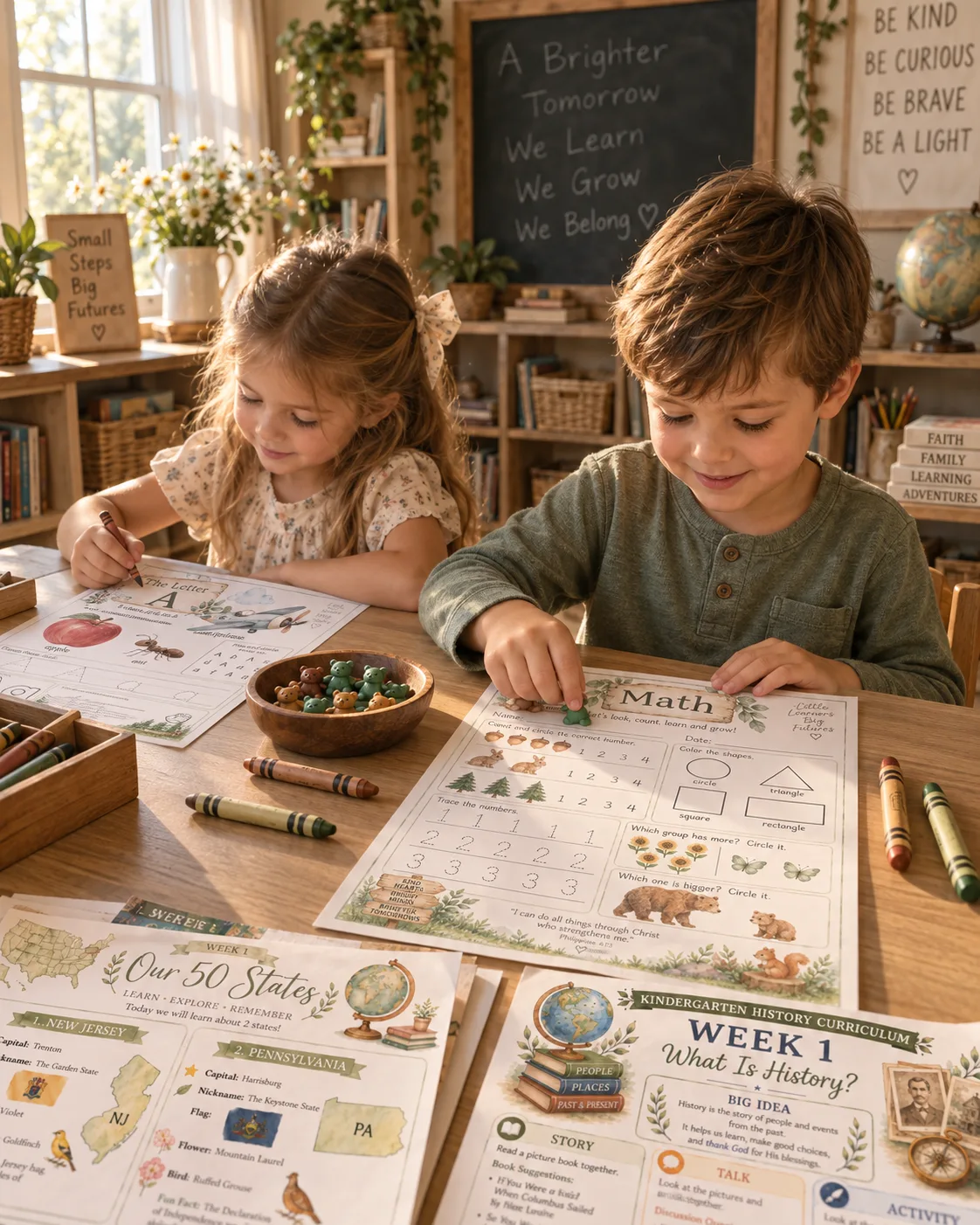
In our classroom the nature shelf sits low, right beside the open cubbies of woven baskets, so the boys can reach every piece without asking me. It is not styled. It is a few things, chosen on purpose, and it changes as the season does.
- One wooden tray for "treasures from today", which empties and refills as the week goes on
- Leaves in the colors we have found, laid flat in a basket so they do not crumble
- Acorns and pinecones in a small bowl, for hands
- One real pumpkin, small enough for the three-year-old to lift
- A jar for the things too tiny to place anywhere else
- A magnifying glass, because looking closely is half the lesson
That is all of it. I have learned that a crowded shelf gets glanced at, and a sparse one gets studied.
The one rule: hands are welcome
A nature table that cannot be touched is a museum, and my boys are not visitors in it. The only rule is that we handle things gently and put them back where we found them. I say it once, at the start of the season: "These are God's creations, and we are gentle with them." After that, a quiet look from me is plenty.
The three-year-old mostly carries things. He moves acorns from the bowl to the tray and back again, and I let him. The five-year-old sorts, compares and asks questions I cannot always answer. Both of them are doing real work.
A five-minute look-and-name routine
This is the part you can do tomorrow morning, with whatever you have. Right after our verse on the chalkboard, we gather at the shelf and I pick one object. Then we do four small things.
- Look. I hand over the magnifying glass and say, "Tell me one thing you notice."
- Touch. "Is it smooth or rough? Heavy or light?"
- Name. For the five-year-old, a color or a shape word. For the three-year-old, simply the name of the thing, said back to me.
- Place. The child decides where it goes on the shelf, and I write a little label on an index card in their words.
The labels are my favorite part. "Leaf like a hand" has been on our shelf for a week now. I would never have written that, and it is better than anything I could have written.
Let the shelf feed the rest of the morning
Once the shelf is part of your rhythm, it quietly supplies the lessons. After a walk, we sort what we brought home, and the fall treasures turn into color words, counting and comparing without any extra planning from me.
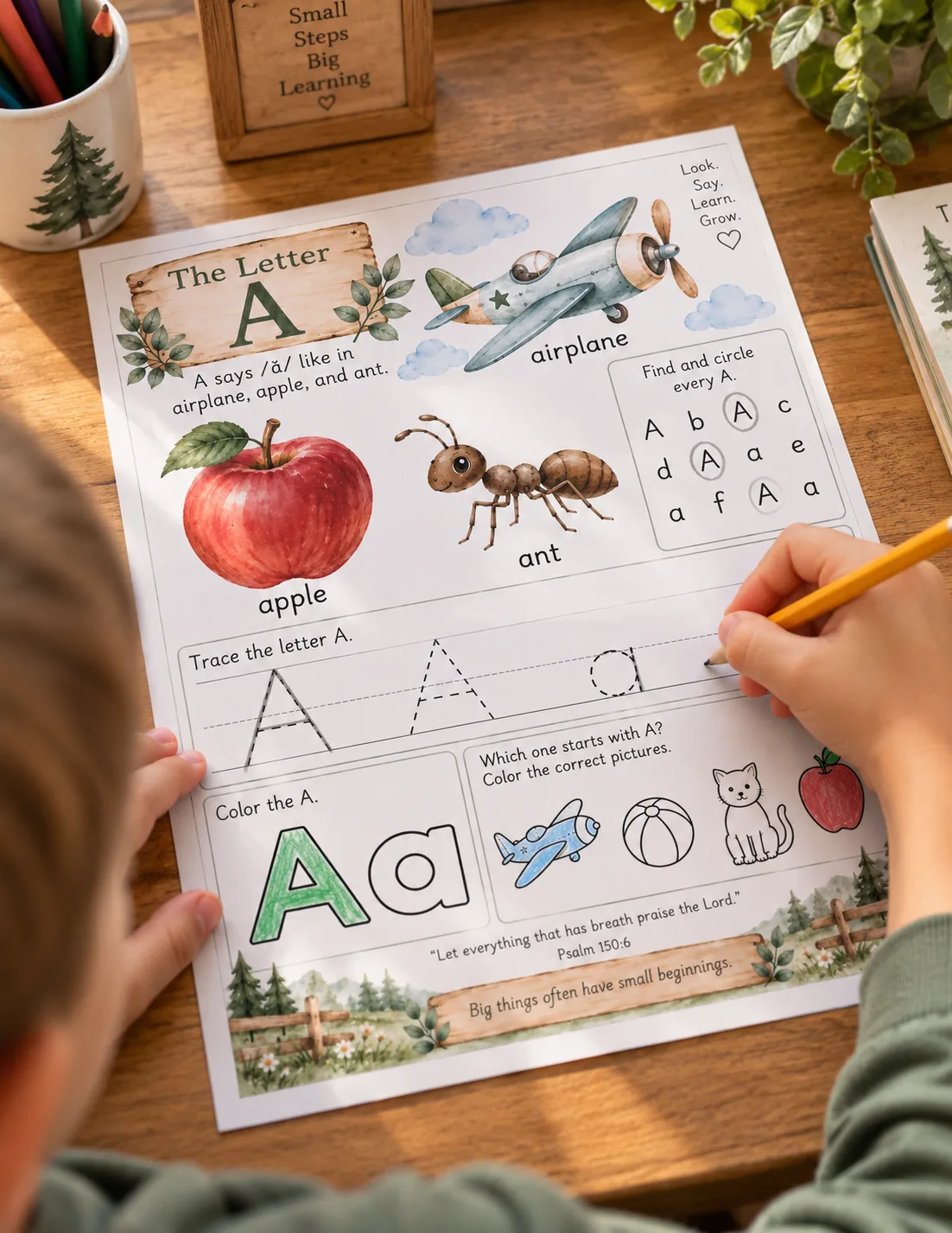
When the boys are drawn to the leaves, I reach for the Fall Leaf Stamping Printable Activity Pack and let them press a real leaf beside the printed one. When the pumpkin gets picked up and compared to the little ones, the Pumpkin Size Sort cut and paste is a gentle next step for a preschooler. And for a younger child who is just learning red, yellow, orange and brown, the Fall Colors leaves page matches what is already sitting in the basket.
None of that is required. The shelf is enough on its own.
If you do not have a shelf
For two years we did all of this at the kitchen table, long before the classroom existed, and plenty of you teach at one and always will. A nature table does not need a room. Here are three ways to make one anyway:
Clear one end of the table the night before and lay down a single tray. Or use a windowsill, which has the bonus of good light. Or keep a basket by the door and bring it to the table when you are ready to look. If you are still planning your space, I wrote more about designing your homeschool classroom, and it applies to a corner just as well as a whole room.
Where the treasures come from
Our best shelf pieces come from a short walk with a basket, and I do not go far. If you would like a simple list to carry along, the nature-walk basket list is one of the 44 free printables you get when you join as a member. Membership is free, forever, and it also takes half off every worksheet in the worksheet shop. If you want to swap shelf ideas with other mamas, the members' forum has a room for each season.
Let it be small and let it change
I used to think a nature table had to look like the ones I saw online. Now I think it only has to be true to the week we are having. When the leaves go brown and the pumpkin softens, we retire them together, and the boys learn something about seasons that I could never put on a worksheet.
Tomorrow, set out one tray and one leaf, and see what your children do with it. It is a quiet way to teach them that the world around them was made with care, and that noticing it is a kind of worship.