
The candle was lit, the verse was on the chalkboard, and my five-year-old was already counting acorns from the nature shelf before I had said a word about math. That is usually how count and circle begins in our classroom. He counts something real first, and then we put it on paper.
I am not a math curriculum expert. I am a mama with a three-year-old and a five-year-old and one big table. But this one small habit has carried us through more mornings than anything else, so I want to tell you exactly how we use it.
What count and circle actually is
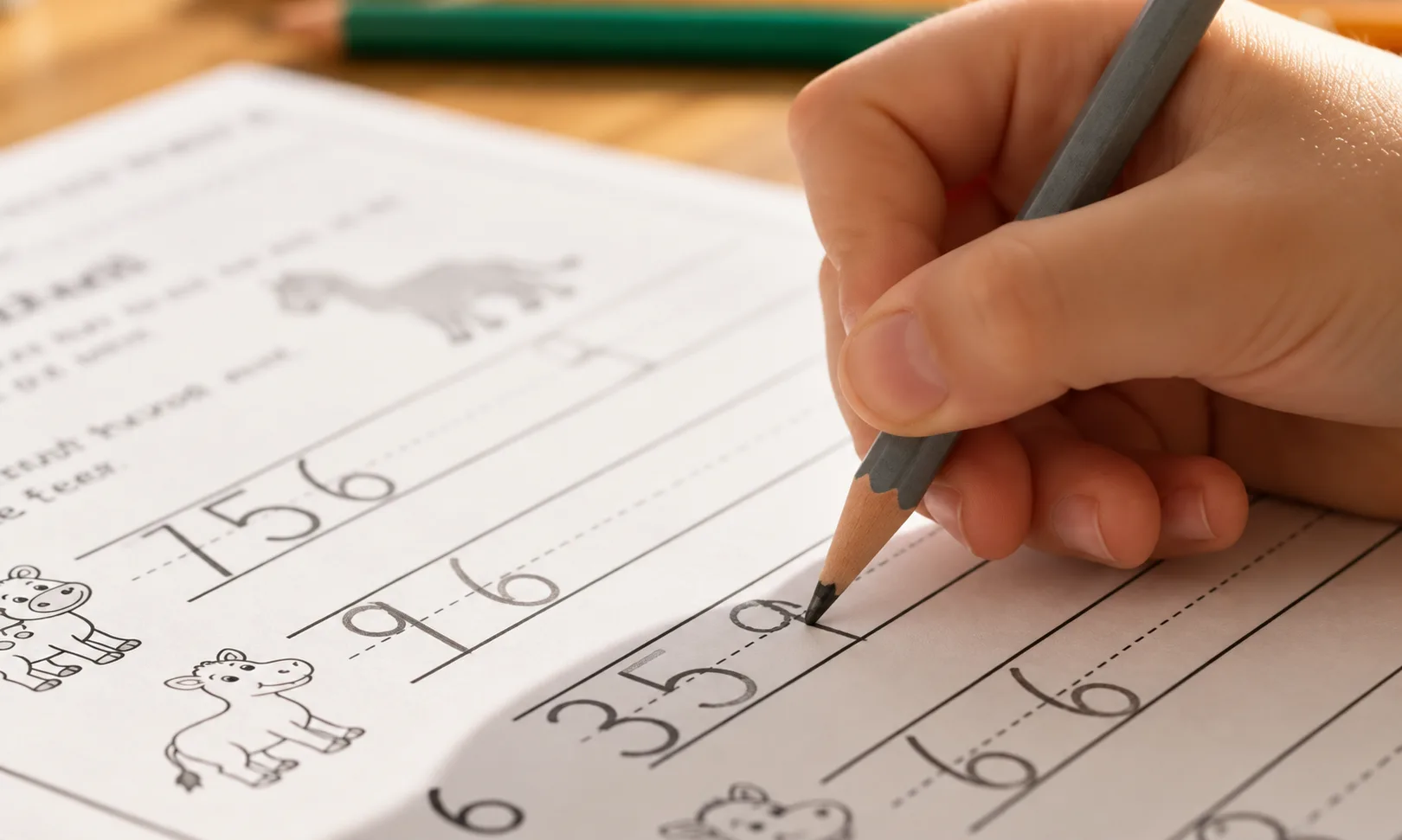
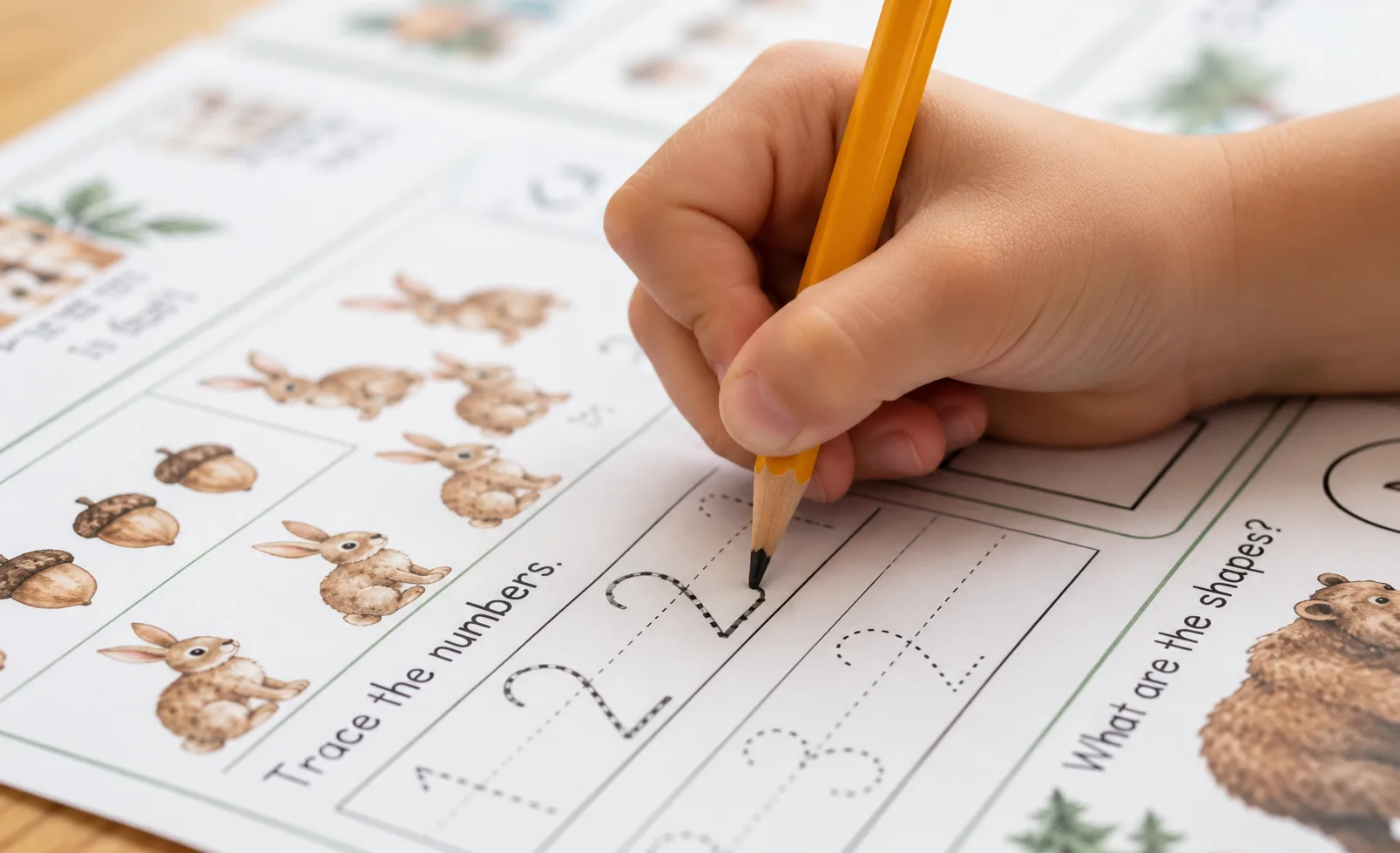
It is the plainest page there is. A group of pictures, a child who counts them, and a pencil or crayon that circles the answer. That is all. The circle matters more than you would think, because it asks a little hand to decide something and then show it.
We use it in two ways:
- Circle the number. Seven pumpkins sit at the top of the page, and three numerals sit below. My five-year-old counts and circles the one that matches.
- Circle the group. Three small boxes hold different amounts of something, and my three-year-old circles the box with the most, or the box with exactly four.
Same page idea, two very different jobs. That is why it works for two ages at one table.
How we set it up in our classroom
Our shared table is counter height with stools, so both boys can reach the same page when I want them side by side. I clip the week's work to the wall, and the count and circle page goes at the front so we begin with it. The date and the verse are already on the chalkboard, and we say them together first. Counting the days of the month on the chalkboard is, quietly, our first count of the morning.
Each boy has a cup of fat crayons from his cubby basket. I give the five-year-old a pencil only when he asks, which he does more now than he used to. Then I sit between them on my own stool and we begin.
If you are working at the kitchen table, as we did for two full years, clear one end the night before and set out just the page and two crayons. You do not need a classroom for this. You need a flat place and ten unhurried minutes. If you are curious how the room came together, I wrote about designing your homeschool classroom, but please do not wait for one.
The five-year-old version, step by step
Here is what we do, in order:
- Count real things first. Five acorns, seven buttons, whatever is in the basket. He moves each one across the table as he counts.
- Count the pictures with a finger. I say, "Touch each one, and say its number out loud."
- Say the last number again. "How many are there altogether?" He says it, and I wait. The last number is the answer, and that idea takes many mornings to settle in.
- Find it and circle it. Only now does he look at the numerals.
If he circles the wrong one, I do not say wrong. I say, "Let's count them together again." Nine times out of ten he catches it himself, and the little smile when he does is the whole reason I teach at home.
The three-year-old version
My three-year-old does not need numerals yet. He needs to touch, count and decide. I give him a page with two groups, and I say, "Which one has more? Put your finger on it." Then he circles it with a big crayon loop that goes well outside the lines. That is perfect.
Some mornings he counts "one, two, five, eleven." I let him. I say, "Let's count again together," and I count slowly beside him. Counting in order is something he will grow into, and the circling is what keeps him feeling like part of the work. If you want more on holding a small one at the table, ten minutes is plenty at this age.
Where we find the pages
I will be honest that a count and circle page is easy to draw yourself. A row of stars on a sheet of paper is enough. On busy weeks, I borrow from other printables we already have. The Pumpkin Size Sort cut and paste activity has five watercolor pumpkins, and my five-year-old counts them and says how many are big before we do anything else. The four maple leaves on the Fall Colors leaves worksheet are good for counting too: "How many are red? Circle that many."
You can browse everything in the worksheet shop. Each page is $4.00, or $2.00 once you join free as a member, and membership also opens the 30 free printables. Our worksheets are print-at-home PDFs on US letter paper, for ages 2 through 7.
A ten-minute morning you can try tomorrow
Light your candle or write the date. Put a small basket of anything countable on the table, like acorns, buttons or dry beans. Tell your older child, "Count these for me, then I'll show you a page." Give your younger one a smaller handful and ask, "Can you give me three?" Draw two groups of stars on a sheet of paper, one with more, one with fewer. Let each child circle the answer, then say, "Thank you for working so hard." Close the book. That is a good math morning.
If you try it and want to compare notes, the members' forum has rooms by age, and I would love to hear what your children counted.
Why I keep it so small
Some mornings I catch myself wanting math to look bigger than it is. Then I remember that counting is, at its root, noticing that everything has been given in some number and order. We are not drilling. We are paying attention to a world that was made with care, down to the stars. So we count the acorns, circle the answer, and give thanks.
Psalm 147:4 says, "He determines the number of the stars; he gives to all of them their names." If God counts the stars and knows each by name, surely He is not troubled by a three-year-old who skips from two to five.