
The lamp in the reading nook was already on, and I was finishing my coffee at my workstation in the corner, when I heard my five-year-old reading the chalkboard verse out loud to his little brother. Nobody had asked him to. He just stood there with one finger under each word, slow and serious, and my three-year-old repeated it back one phrase at a time.
That's the moment I tell people about when they ask me, and you ask me a lot: when did you know it was working?
The morning I stopped asking
For our first two years we did all of this at the kitchen table, and I asked myself that question almost every day. Was he behind? Should I be doing more? Was I cut out for this? I kept looking for proof in finished worksheets and how long they'd sit still. Neither one told me much.
What I learned is that the proof rarely shows up during the lesson. It shows up afterward, sideways, when you're not looking for it. A seed doesn't give you a report card. First the blade, then the ear. When you know what to watch for, you start seeing it everywhere.
Five quiet signs it is working
1. They bring the learning back to you
The verse on the chalkboard was one. Another was my oldest pointing at a stop sign and telling me it was an octagon, three weeks after we'd drawn shapes and I'd assumed none of it stuck. If your child hands you something from a lesson you'd already forgotten, it went in.
2. They play it later
At three and five, play is how they tell you what they understood. My boys lined up stuffed animals biggest to smallest the afternoon after we did the pumpkin size sort cut and paste page. My little one got the order a bit wrong and was completely sure of himself. That's still learning.
3. Starting gets easier
I'll be honest, there was a season when getting started took longer than the lesson did. That fades once the rhythm is simple and the room is ready. When your child walks to the table, pulls a basket from the cubby and sits down before you call, the habit has taken root, and habits carry a lot of weight at this age.
4. They notice more
Children who are learning start to look closer. After a few walks with the fall scavenger hunt nature walk printable, my boys began pointing out acorn caps and red maple leaves without the paper in hand. Now the nature shelf fills itself. Noticing is where science begins, and it's also where worship begins: look at what God made.
5. You still like each other at noon
This is the one I care about most. If the morning ends with a read-aloud in the soft chair and nobody wants to get up, something is going right, whatever the pages say. Homeschooling is discipleship before it's anything else, and a warm relationship is fruit worth counting.
A five-minute Friday habit to see it yourself
Signs are easy to miss in the middle of a week, so I built a small habit to catch them. In our classroom, the week's work gets clipped up on one wall. On Friday before lunch, we stand in front of it together. If you teach at a kitchen table, just spread the week's pages across one end. It works the same way.
Here's roughly what I say:
- "Show me the one you're proudest of." Then just listen. Don't correct.
- "What was tricky this week?" Their answer tells you what to repeat next week.
- "Tell your brother how you did this one." Teaching a sibling is the best review there is.
- "Let's thank God for something we learned." Keep it to one sentence each.
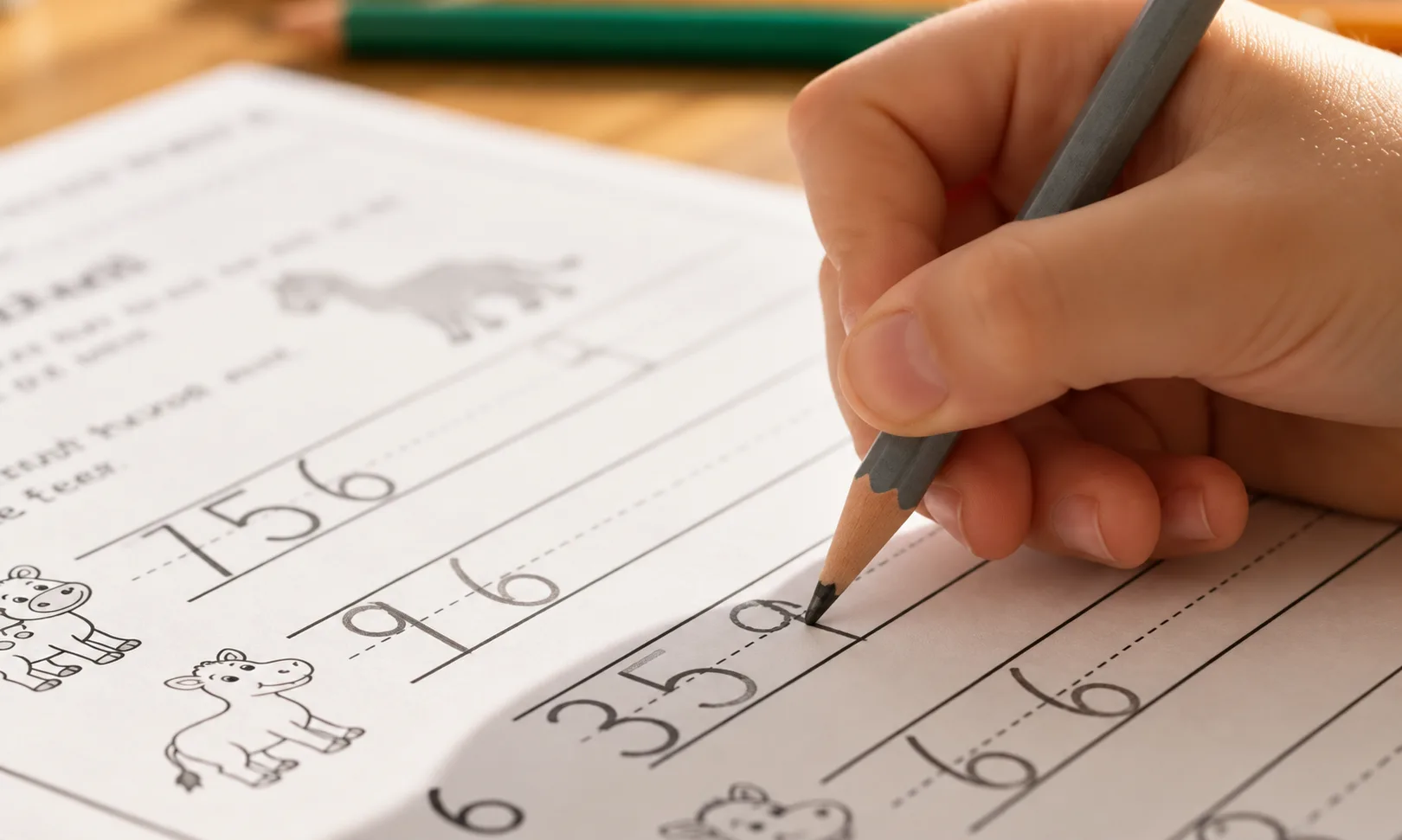
Then I write one line in a notebook: what surprised me. Months later, those lines are the answer to your question. You'll flip back and see a child who couldn't hold a pencil in September now writing his name in March.
If you're still planning your space, I share how the wall and cubbies came together in designing your homeschool classroom. None of it has to be fancy. A clothespin on a string works fine.
When it does not feel like it is working
Some weeks the wall stays thin and the notebook line reads "we got through it." That's allowed. Children grow in bursts and plateaus, and a slow week isn't a failing year. If you worry that something deeper is going on with your child's development, your pediatrician is the right person to ask, not a blog.
If the worry is about whether you're doing enough on paper, remember that requirements vary a lot from state to state. I keep links to state laws and curriculum we trust on the resources page, and the case for homeschooling and our FAQ covers the questions I asked myself early on.
You don't have to carry the doubt by yourself, either. The members' forum has a room just for the hard days, and the mamas there are good at seeing the green shoots you can't see yet. Joining is free, and it comes with free printables like the weekly rhythm chart, which makes the Friday habit even easier to keep.
First the blade
So here's my real answer. I knew it was working when my son read a verse to his brother without being asked. But the harder truth, and the more hopeful one, is that it was working long before that, on all the quiet mornings when I couldn't see anything happening.
Keep planting, mama. Light the lamp, write the verse, clip up the pages. The growth belongs to God, and He's faithful with small seeds.
For the earth bringeth forth fruit of herself; first the blade, then the ear, after that the full corn in the ear. Mark 4:28